 Mantra
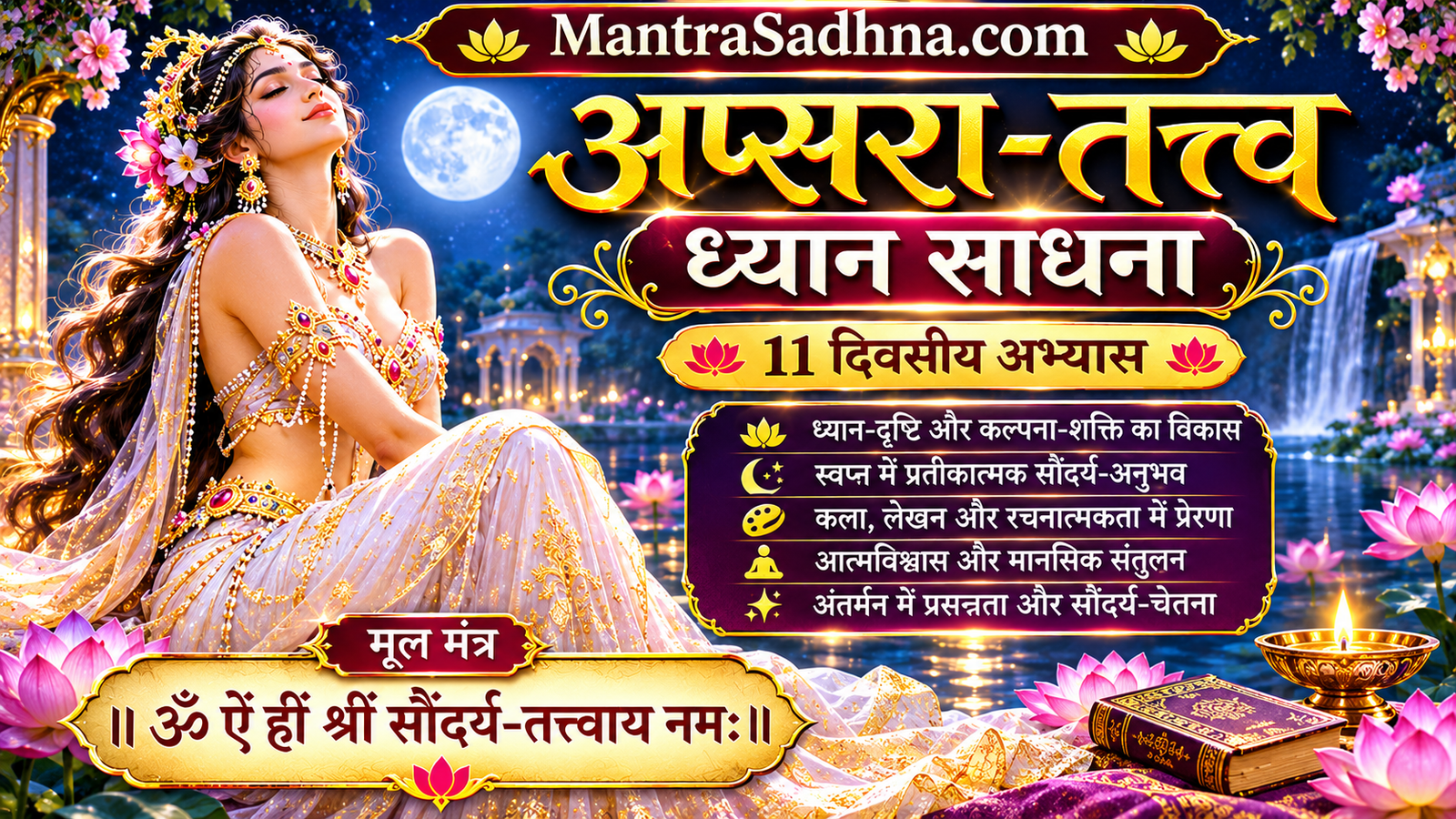
Apsara Tattva Meditation, Dream Experience and Beauty Consciousness – Complete 11-Day Guide
Apsara meditation is a symbolic contemplative practice inspired by the celestial figures of Indian mythology and classical literature. Apsaras are associated with beauty, dance, music and artistic expression in many traditional narratives.
This 11-day practice uses mantra repetition, gentle visualization and dream journaling as tools for self-reflection. It does not claim to summon a celestial being or produce supernatural encounters.
1. Understanding Apsara Tattva
In Hindu mythology and Sanskrit literature, Apsaras are celestial female figures frequently connected with heavenly courts, music, dancing and extraordinary beauty. Well-known names include Urvashi, Menaka and Rambha.
Traditional accounts differ in their descriptions of these figures. This article approaches Apsara Tattva through a symbolic lens, interpreting it as an invitation to appreciate artistic beauty, creativity, grace and emotional balance.
What does Apsara Darshan mean in this practice?
Here, the word darshan refers to a consciously imagined visual symbol during meditation. It does not mean seeing an actual external celestial entity.
Some practitioners may find visualization easy, while others experience only a sense of calm or an awareness of their breathing. Both are valid experiences.
2. Main Objectives
- Develop a regular meditation routine.
- Practice gentle and voluntary mental visualization.
- Explore creativity and appreciation of beauty.
- Record and reflect on remembered dreams.
- Improve awareness of thoughts and emotions.
- Encourage calmness and thoughtful self-expression.
3. Who May Find This Practice Suitable?
This meditation may appeal to adults interested in mythology, contemplative exercises, creative writing, music, art and dream journaling.
It is not intended for those seeking guaranteed supernatural visions, control over another person or proof of contact with a celestial being.
People who experience distressing perceptual symptoms, severe anxiety during visualization or difficulty distinguishing imagined experiences from reality should avoid intensive imagery exercises and seek appropriate professional guidance.
4. Materials for the Practice
- A quiet, comfortable room.
- A white or light-pink meditation mat.
- An optional ghee lamp, placed safely.
- An optional crystal mala for counting repetitions.
- A notebook for dream journaling.
- Comfortable clothing and drinking water.
No special object is required for successful participation in this simple meditation exercise.
5. Time, Place and Duration
Place: A quiet bedroom or meditation area.
Time: Before bedtime, provided that the practice does not delay necessary sleep.
Duration: Eleven days as an introductory routine.
Direction: Facing east or northeast is optional rather than mandatory.
Consistency may help establish a habit, but missing a day does not cause spiritual harm or require restarting the entire practice.
6. Suggested Meditation Mantra
॥ ॐ ऐं ह्रीं श्रीं सौंदर्य-तत्त्वाय नमः ॥
Om Aim Hreem Shreem Saundarya Tattvaya Namah
This mantra is presented as part of the proposed contemplative routine. It is not identified here as a historically verified mantra from a particular classical text.
Daily Chanting Count
The suggested count is 108 repetitions per day, equivalent to one traditional mala.
The count is a practical structure rather than a guarantee of a specific result. Participants may adjust it to their comfort and available time.
7. Preparing for Meditation
- Choose a quiet location with minimal interruptions.
- Silence unnecessary phone notifications.
- Sit comfortably on a mat or chair.
- Relax your shoulders and facial muscles.
- Observe your natural breathing for two minutes.
- Set a simple intention for calmness and self-reflection.
Suggested Intention
"I will use this meditation to explore calmness, beauty, creativity and self-awareness without expecting supernatural results."
8. Complete Step-by-Step Meditation Method
Step 1: Create a Peaceful Environment
Prepare a comfortable space. If you use a lamp, keep it away from curtains, bedding and other flammable materials.
Step 2: Sit Comfortably
Keep your posture relaxed. Sitting on a chair is perfectly acceptable if sitting on the floor is uncomfortable.
Step 3: Observe Your Breathing
Spend two or three minutes noticing your natural breathing without forcing deep breaths or breath retention.
Step 4: Repeat the Mantra
Chant the suggested mantra 108 times at a comfortable pace. A mala or digital counter may help with counting.
Step 5: Rest in Silence
After chanting, remain quiet for approximately one minute and observe your thoughts without judgment.
Step 6: Begin Symbolic Visualization
Spend five to seven minutes imagining a peaceful natural scene associated with beauty and calmness.
Step 7: Finish Gently
Open your eyes, become aware of your surroundings and return to your normal bedtime routine.
9. Main Apsara-Inspired Visualization
The visualization below is entirely imaginative. Its purpose is to create a peaceful mental image rather than an encounter with an external being.
- Close your eyes and imagine sitting in a peaceful garden.
- Visualize soft moonlight illuminating flowers and trees.
- Imagine a distant, gentle feminine figure formed from light.
- Understand this figure as a symbol of beauty, grace and artistic inspiration.
- Do not attempt to summon, communicate with or approach the figure.
- If the image does not appear, simply visualize flowers, moonlight or a calm landscape.
- When your mind wanders, return your attention to your breathing.
- After a few minutes, release the imagined scene and notice your actual surroundings.
Remember: Mental images during voluntary visualization are products of imagination and should not be interpreted as evidence of a supernatural presence.
10. Dream Awareness and Dream Journaling
Dreams are a normal part of sleep. Their content may reflect memories, emotions, experiences and recent thoughts.
Keeping a dream journal can be an interesting way to reflect on remembered dreams, although it does not guarantee that any particular image or character will appear.
How to Keep a Dream Journal
- Keep a notebook beside your bed.
- After waking, write down any dream you remember.
- Record locations, colors, characters and emotions.
- If you remember nothing, simply note that no dream was recalled.
- Avoid treating dream imagery as a prediction or a supernatural message.
11. Suggested 11-Day Practice Schedule
| Day | Focus |
|---|---|
| 1 | Set an intention and prepare your space |
| 2 | Practice awareness of breathing |
| 3 | Visualize peaceful moonlight |
| 4 | Appreciate natural beauty |
| 5 | Explore symbolic visualization |
| 6 | Observe thoughts calmly |
| 7 | Review your dream journal |
| 8 | Reflect on creative inspiration |
| 9 | Cultivate confidence and kindness |
| 10 | Practice balanced self-reflection |
| 11 | Review and conclude the practice |
Each day may include the suggested 108 mantra repetitions followed by a short period of meditation. These themes are optional organizational aids.
12. Possible Experiences During Meditation
- A temporary sense of relaxation.
- Imagined scenes involving light, flowers or landscapes.
- Greater interest in remembering dreams.
- New ideas for writing, music or artwork.
- More awareness of personal emotions.
- No unusual experiences at all.
There is no required experience or visual milestone. The absence of visions does not mean that the exercise has failed.
13. What About Frightening Experiences?
Some people may feel uncomfortable with extended visualization or experience unpleasant thoughts. If this happens, open your eyes, notice your surroundings and stop the exercise.
Disturbing dreams, sleep paralysis and unusual imagery around sleep can have ordinary sleep-related explanations. They should not automatically be interpreted as encounters with supernatural beings.
If distress, sleep disruption or unusual perceptual experiences persist, consult an appropriate healthcare professional.
14. Potential Benefits of the Routine
As a structured activity, the practice may provide an opportunity to:
- Establish a regular quiet period.
- Explore imagination and creativity.
- Develop a habit of reflective journaling.
- Appreciate art, music and natural beauty.
- Observe emotions without immediate reaction.
- Practice gentle attention and self-awareness.
These are potential experiences rather than guaranteed outcomes. No scientific evidence is claimed for supernatural abilities or special effects from this particular 11-day mantra routine.
15. What to Do After Eleven Days
Review your notes and consider whether the routine helped you establish a comfortable period of reflection.
You may continue ordinary meditation or journaling if you find them useful. There is no requirement to extend the practice to 21 or 41 days.
16. Important Precautions
- Do not expect a real Apsara to appear.
- Maintain a clear distinction between imagination and external reality.
- Do not force mental images or extend meditation when uncomfortable.
- Protect your normal sleep schedule.
- Never fall asleep while a candle or oil lamp is burning.
- Stop if you experience distress, fear or sleep disruption.
- Do not make major decisions based solely on dreams.
- Do not use the practice as a replacement for medical or mental health care.
17. Frequently Asked Questions
Q1. Can this practice make a real Apsara appear?
Answer: No such result is claimed. The practice uses symbolic visualization and reflection.
Q2. Can I dream about an Apsara?
Answer: Dreams can contain many imagined figures. Dreaming about an Apsara-like character does not establish the existence of an external celestial visitor.
Q3. Is this a Vashikaran ritual?
Answer: No. It does not attempt to control another person's thoughts, emotions or behavior.
Q4. Can women practice this meditation?
Answer: Yes. This simple contemplative exercise is not restricted by gender.
Q5. How many days does it take to experience results?
Answer: There is no guaranteed timeline. Eleven days is simply the proposed duration of the introductory routine.
Q6. Is a spiritual teacher required?
Answer: A teacher is not required for this simple visualization exercise. Traditional initiation-based practices may follow different rules.
Q7. What if I miss a day?
Answer: You can continue when convenient. There is no need to fear negative consequences.
Q8. What if I cannot visualize a figure?
Answer: That is normal. You can focus on breathing, moonlight or another peaceful image instead.
Q9. Does the mantra guarantee Apsara Siddhi?
Answer: No. This article does not claim supernatural powers or verified Siddhi from the mantra.
Q10. Is dream journaling compulsory?
Answer: No. It is an optional reflective activity for people interested in remembering dreams.
Final Guidance
The purpose of this Apsara-inspired meditation is to explore symbolic beauty, creativity, calmness and self-awareness.
Through gentle chanting, voluntary visualization and reflective journaling, participants can create a structured period of personal contemplation without relying on supernatural expectations.
Explore more meditation, mantra and spiritual tradition guides at MantraSadhna.com.