 Mantra
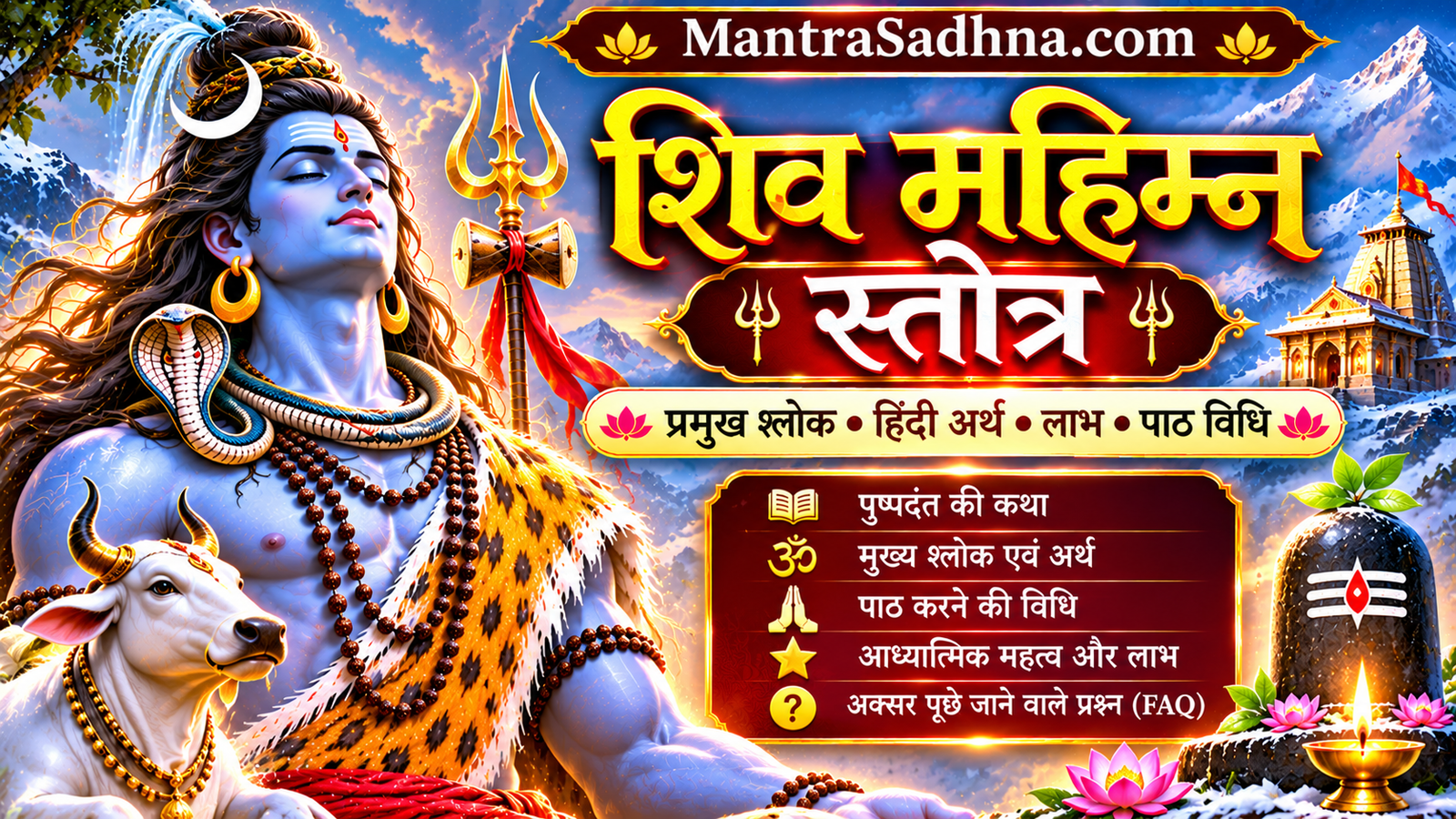
Shiva Mahimna Stotra – All 43 Sanskrit Verses with English Meaning
Shiva Mahimna Stotra is a celebrated Sanskrit hymn praising the immeasurable greatness of Lord Shiva. It is traditionally attributed to the Gandharva Pushpadanta. Below are all 43 verses of a widely circulated extended recension, each followed by an original, accessible English explanation. Minor textual variants exist across editions.
The Traditional Story of Pushpadanta
According to a devotional legend, the Gandharva Pushpadanta collected flowers from King Chitraratha’s garden for Shiva worship. When he inadvertently stepped on flowers already offered to Shiva, he lost his power of invisibility. He then composed this hymn in repentance. This is a religious narrative, not an independently verified historical account.
Complete Shiva Mahimna Stotra: 43 Verses and English Meanings
Verse 1
महिम्नः पारं ते परमविदुषो यद्यसदृशी
स्तुतिर्ब्रह्मादीनामपि तदवसन्नास्त्वयि गिरः।
अथाऽवाच्यः सर्वः स्वमतिपरिणामावधि गृणन्
ममाप्येष स्तोत्रे हर निरपवादः परिकरः॥१॥
English meaning: Even Brahma and other exalted beings cannot reach the limit of your glory. Every person praises you according to the extent of their understanding; therefore, O Shiva, accept my humble attempt as well.
Verse 2
अतीतः पन्थानं तव च महिमा वाङ्मनसयोः
अतद्-व्यावृत्त्या यं चकितमभिधत्ते श्रुतिरपि।
स कस्य स्तोतव्यः कतिविधगुणः कस्य विषयः
पदे त्वर्वाचीने पतति न मनः कस्य न वचः॥२॥
English meaning: Your greatness lies beyond speech and thought, and the Vedas can only point toward it by negating limited descriptions. No one can define your complete nature, although every mind tries to speak of the divine in familiar terms.
Verse 3
मधुस्फीता वाचः परमममृतं निर्मितवतः
तव ब्रह्मन् किं वागपि सुरगुरोर्विस्मयपदम्।
मम त्वेतां वाणीं गुणकथनपुण्येन भवतः
पुनामीत्यर्थेऽस्मिन् पुरमथन बुद्धिर्व्यवसिता॥३॥
English meaning: Your gift of speech is sweeter than nectar, so even the eloquence of the gods cannot astonish you. I compose this praise to purify my own words through speaking of your virtues.
Verse 4
तवैश्वर्यं यत् तज्जगदुदयरक्षाप्रलयकृत्
त्रयीवस्तु व्यस्तं तिसृषु गुणभिन्नासु तनुषु।
अभव्यानामस्मिन् वरद रमणीयामरमणीं
विहन्तुं व्याक्रोशीं विदधत इहैके जडधियः॥४॥
English meaning: The origin, preservation and dissolution of the cosmos are expressions of your power, represented through three forms and qualities. The poet criticizes arguments that dismiss this sacred vision without understanding it.
Verse 5
किमीहः किं कायः स खलु किमुपायस्त्रिभुवनं
किमाधारो धाता सृजति किमुपादान इति च।
अतर्क्यैश्वर्ये त्वय्यनवसर दुःस्थो हतधियः
कुतर्कोऽयं कांश्चिन्मुखरयति मोहाय जगतः॥५॥
English meaning: People question the creator’s form, instruments, materials and foundation. The poet warns that clever but misplaced speculation cannot encompass your inconceivable sovereignty.
Verse 6
अजन्मानो लोकाः किमवयववन्तोऽपि जगताम्
अधिष्ठातारं किं भवविधिरनादृत्य भवति।
अनीशो वा कुर्याद् भुवनजनने कः परिकरो
यतो मन्दास्त्वां प्रत्यमरवर संशेरत इमे॥६॥
English meaning: Can the worlds arise without an underlying cause or governing principle? The verse challenges those who doubt the divine source of creation while overlooking the limits of their reasoning.
Verse 7
त्रयी साङ्ख्यं योगः पशुपतिमतं वैष्णवमिति
प्रभिन्ने प्रस्थाने परमिदमदः पथ्यमिति च।
रुचीनां वैचित्र्यादृजुकुटिल नानापथजुषां
नृणामेको गम्यस्त्वमसि पयसामर्णव इव॥७॥
English meaning: The Vedic, Sankhya, Yoga, Pashupata and Vaishnava paths differ in their approaches. Yet, like rivers that follow diverse courses and reach the ocean, seekers ultimately approach one supreme reality.
Verse 8
महोक्षः खट्वाङ्गं परशुरजिनं भस्मफणिनः
कपालं चेतीयत् तव वरद तन्त्रोपकरणम्।
सुरास्तां तामृद्धिं दधति तु भवद्भूप्रणिहितां
न हि स्वात्मारामं विषयमृगतृष्णा भ्रमयति॥८॥
English meaning: Your bull, staff, axe, animal skin, ashes, serpents and skull are unlike the riches of the gods. These emblems express freedom from the restless pursuit of possessions and pleasure.
Verse 9
ध्रुवं कश्चित् सर्वं सकलमपरस्त्वध्रुवमिदं
परो ध्रौव्याऽध्रौव्ये जगति गदति व्यस्तविषये।
समस्तेऽप्येतस्मिन् पुरमथन तैर्विस्मित इव
स्तुवन् जिह्रेमि त्वां न खलु ननु धृष्टा मुखरता॥९॥
English meaning: Some call the universe permanent, others impermanent, and still others describe both aspects. Faced with conflicting theories, the poet admits the boldness of attempting to praise the infinite.
Verse 10
तवैश्वर्यं यत्नाद् यदुपरि विरिञ्चिर्हरिरधः
परिच्छेतुं यातावनिलमनलस्कन्धवपुषः।
ततो भक्तिश्रद्धा-भरगुरु-गृणद्भ्यां गिरिश यत्
स्वयं तस्थे ताभ्यां तव किमनुवृत्तिर्न फलति॥१०॥
English meaning: Brahma searched upward and Vishnu downward for the limits of your fiery column, but neither succeeded. Their reverence and praise brought your manifestation, illustrating the power of devotion.
Verse 11
अयत्नादासाद्य त्रिभुवनमवैरव्यतिकरं
दशास्यो यद्बाहूनभृत-रणकण्डू-परवशान्।
शिरःपद्मश्रेणी-रचितचरणाम्भोरुहबलेः
स्थिरायास्त्वद्भक्तेस्त्रिपुरहर विस्फूर्जितमिदम्॥११॥
English meaning: Ravana’s immense strength is linked in the hymn to his unwavering worship, symbolized by offering his heads like lotuses at your feet. The verse praises devotion while leaving room to question how power is used.
Verse 12
अमुष्य त्वत्सेवा-समधिगतसारं भुजवनं
बलात् कैलासेऽपि त्वदधिवसतौ विक्रमयतः।
अलभ्यापातालेऽप्यलसचलिताङ्गुष्ठशिरसि
प्रतिष्ठा त्वय्यासीद् ध्रुवमुपचितो मुह्यति खलः॥१२॥
English meaning: Proud of his strength, Ravana attempted to lift Mount Kailasa. A slight movement of your toe overwhelmed him, showing how arrogance can undo even extraordinary ability.
Verse 13
यदृद्धिं सुत्राम्णो वरद परमोच्चैरपि सतीम्
अधश्चक्रे बाणः परिजनविधेयत्रिभुवनः।
न तच्चित्रं तस्मिन् वरिवसितरि त्वच्चरणयोः
न कस्याप्युन्नत्यै भवति शिरसस्त्वय्यवनतिः॥१३॥
English meaning: The demon Bana attained extraordinary influence through service at your feet, according to the traditional account. Bowing before Shiva is portrayed not as humiliation but as a source of spiritual elevation.
Verse 14
अकाण्ड-ब्रह्माण्ड-क्षयचकित-देवासुरकृपा
विधेयस्याऽऽसीद् यस्त्रिनयन विषं संहृतवतः।
स कल्माषः कण्ठे तव न कुरुते न श्रियमहो
विकारोऽपि श्लाघ्यो भुवन-भयभङ्ग-व्यसनिनः॥१४॥
English meaning: You swallowed the deadly poison to protect gods and demons from destruction. The dark mark upon your throat is an ornament of compassion, because sacrifice for the welfare of others is glorious.
Verse 15
असिद्धार्था नैव क्वचिदपि सदेवासुरनरे
निवर्तन्ते नित्यं जगति जयिनो यस्य विशिखाः।
स पश्यन्नीश त्वामितरसुरसाधारणमभूत्
स्मरः स्मर्तव्यात्मा न हि वशिषु पथ्यः परिभवः॥१५॥
English meaning: Cupid’s arrows were said to overcome gods, demons and humans, yet they failed before you. True mastery of the self is not defeated by external temptation.
Verse 16
मही पादाघाताद् व्रजति सहसा संशयपदं
पदं विष्णोर्भ्राम्यद्भुज-परिघ-रुग्ण-ग्रहगणम्।
मुहुर्द्यौर्दौस्थ्यं यात्यनिभृत-जटा-ताडित-तटा
जगद्रक्षायै त्वं नटसि ननु वामैव विभुता॥१६॥
English meaning: Your cosmic dance appears to shake the earth, planets and heavens. The poet marvels at the tremendous energy of a dance undertaken for the protection of the universe.
Verse 17
वियद्व्यापी तारागण-गुणित-फेनोद्गम-रुचिः
प्रवाहो वारां यः पृषतलघुदृष्टः शिरसि ते।
जगद्द्वीपाकारं जलधिवलयं तेन कृतमि-
त्यनेनैवोन्नेयं धृतमहिम दिव्यं तव वपुः॥१७॥
English meaning: The celestial Ganga appears as a tiny stream in your matted hair, yet spreads into vast waters on earth. This contrast illustrates the immeasurable scale of your divine form.
Verse 18
रथः क्षोणी यन्ता शतधृतिरगेन्द्रो धनुरथो
रथाङ्गे चन्द्रार्कौ रथ-चरण-पाणिः शर इति।
दिधक्षोस्ते कोऽयं त्रिपुरतृणमाडम्बर-विधिः
विधेयैः क्रीडन्त्यो न खलु परतन्त्राः प्रभुधियः॥१८॥
English meaning: To destroy Tripura, the earth became your chariot, Brahma its driver, Meru the bow, the sun and moon its wheels, and Vishnu the arrow. Such elaborate equipment is divine play rather than a necessity for an omnipotent lord.
Verse 19
हरिस्ते साहस्रं कमलबलिमाधाय पदयोः
यदेकोने तस्मिन् निजमुदहरन्नेत्रकमलम्।
गतो भक्त्युद्रेकः परिणतिमसौ चक्रवपुषा
त्रयाणां रक्षायै त्रिपुरहर जागर्ति जगताम्॥१९॥
English meaning: Vishnu offered a thousand lotuses at your feet; when one was missing, he offered his own lotus-like eye. The legend celebrates wholehearted devotion and connects it with the gift of the divine discus.
Related reading: Shiva Panchakshara Stotram with English meaning।
Verse 20
क्रतौ सुप्ते जाग्रत् त्वमसि फलयोगे क्रतुमतां
क्व कर्म प्रध्वस्तं फलति पुरुषाराधनमृते।
अतस्त्वां सम्प्रेक्ष्य क्रतुषु फलदान-प्रतिभुवं
श्रुतौ श्रद्धां बध्वा दृढपरिकरः कर्मसु जनः॥२०॥
English meaning: The results of sacrifice depend on the divine principle behind action, not merely its outward performance. Vedic worshippers therefore honor you as the ultimate giver of results.
Verse 21
क्रियादक्षो दक्षः क्रतुपतिरधीशस्तनुभृताम्
ऋषीणामार्त्विज्यं शरणद सदस्याः सुरगणाः।
क्रतुभ्रंशस्त्वत्तः क्रतुफल-विधान-व्यसनिनः
ध्रुवं कर्तुं श्रद्धा विधुरमभिचाराय हि मखाः॥२१॥
English meaning: Daksha’s sacrifice had distinguished priests and celestial participants, yet failed because it lacked respect and devotion toward Shiva. Ritual without humility can lose its spiritual purpose.
Verse 22
प्रजानाथं नाथ प्रसभमभिकं स्वां दुहितरं
गतं रोहिद्भूतां रिरमयिषुमृष्यस्य वपुषा।
धनुष्पाणेर्यातं दिवमपि सपत्राकृतममुं
त्रसन्तं तेऽद्यापि त्यजति न मृगव्याधरभसः॥२२॥
English meaning: The verse recalls a myth in which the creator pursues his own daughter in an improper desire and Shiva, as a hunter, intervenes. The episode is read as a warning against desire that violates moral boundaries.
Verse 23
स्वलावण्याशंसा धृतधनुषमह्नाय तृणवत्
पुरः प्लुष्टं दृष्ट्वा पुरमथन पुष्पायुधमपि।
यदि स्त्रैणं देवी यमनिरत-देहार्ध-घटनात्
अवैति त्वामद्धा बत वरद मुग्धा युवतयः॥२३॥
English meaning: You reduced the god of desire to ashes, showing your freedom from sensual compulsion. Your union with Parvati in the Ardhanarishvara form should not be confused with ordinary attachment.
Verse 24
श्मशानेष्वाक्रीडा स्मरहर पिशाचाः सहचराः
चिता-भस्मालेपः स्रगपि नृकरोटी-परिकरः।
अमङ्गल्यं शीलं तव भवतु नामैवमखिलं
तथाऽपि स्मर्तॄणां वरद परमं मङ्गलमसि॥२४॥
English meaning: You dwell in cremation grounds, wear ashes and are associated with unsettling symbols. Although these seem inauspicious to worldly eyes, devotees recognize you as the source of supreme auspiciousness.
Verse 25
मनः प्रत्यक् चित्ते सविधमविधायात्त-मरुतः
प्रहृष्यद्रोमाणः प्रमद-सलिलोत्सङ्गति-दृशः।
यदालोक्याऽऽह्लादं ह्रद इव निमज्यामृतमये
दधत्यन्तस्तत्त्वं किमपि यमिनस्तत् किल भवान्॥२५॥
English meaning: Yogis turn inward, steady their breath and experience profound joy in contemplation. The poet identifies that inner, nectar-like awareness with your transcendent reality.
Verse 26
त्वमर्कस्त्वं सोमस्त्वमसि पवनस्त्वं हुतवहः
त्वमापस्त्वं व्योम त्वमु धरणिरात्मा त्वमिति च।
परिच्छिन्नामेवं त्वयि परिणता बिभ्रति गिरं
न विद्मस्तत् तत्त्वं वयमिह तु यत् त्वं न भवसि॥२६॥
English meaning: You are described as the sun, moon, wind, fire, water, space, earth and the inner self. These images convey your all-pervading nature: what could truly exist outside you?
Verse 27
त्रयीं तिस्रो वृत्तिस्त्रिभुवनमथो त्रीनपि सुरान्
अकाराद्यैर्वर्णैस्त्रिभिरभिदधत् तीर्णविकृति।
तुरीयं ते धाम ध्वनिभिरवरुन्धानमणुभिः
समस्तव्यस्तं त्वां शरणद गृणात्योमिति पदम्॥२७॥
English meaning: The sounds A, U and M signify triads of worlds, states and deities, while the fourth, transcendent reality is also indicated through Om. The sacred syllable thus points to Shiva as both immanent and beyond all distinctions.
Verse 28
भवः शर्वो रुद्रः पशुपतिरथोग्रः सहमहान्
तथा भीमेशानाविति यदभिधानाष्टकमिदम्।
अमुष्मिन् प्रत्येकं प्रविचरति देव श्रुतिरपि
प्रियायास्मै धाम्ने प्रणिहित-नमस्योऽस्मि भवते॥२८॥
English meaning: Bhava, Sharva, Rudra, Pashupati, Ugra, Mahadeva, Bhima and Ishana are eight names of Shiva. Each expresses an aspect of the divine, and the poet bows to them all.
Verse 29
नमो नेदिष्ठाय प्रियदव दविष्ठाय च नमः
नमः क्षोदिष्ठाय स्मरहर महिष्ठाय च नमः।
नमो वर्षिष्ठाय त्रिनयन यविष्ठाय च नमः
नमः सर्वस्मै ते तदिदमतिसर्वाय च नमः॥२९॥
English meaning: Salutations to the nearest and farthest, the smallest and greatest, the oldest and youngest. You are present in every measure yet transcend every possible measure.
Verse 30
बहुलरजसे विश्वोत्पत्तौ भवाय नमो नमः
प्रबलतमसे तत् संहारे हराय नमो नमः।
जनसुखकृते सत्त्वोद्रिक्तौ मृडाय नमो नमः
प्रमहसि पदे निस्त्रैगुण्ये शिवाय नमो नमः॥३०॥
English meaning: Salutations to Bhava associated with creation and rajas, Hara associated with dissolution and tamas, and Mrida associated with welfare and sattva. Salutations also to Shiva beyond the three qualities.
Verse 31
कृश-परिणति-चेतः क्लेशवश्यं क्व चेदं
क्व च तव गुण-सीमोल्लङ्घिनी शश्वदृद्धिः।
इति चकितममन्दीकृत्य मां भक्तिराधाद्-
वरद चरणयोस्ते वाक्य-पुष्पोपहारम्॥३१॥
English meaning: My mind is small and burdened with suffering, while your glory is limitless. Yet devotion has emboldened me to offer the flowers of my words at your feet.
Verse 32
असितगिरिसमं स्यात् कज्जलं सिन्धुपात्रे
सुरतरुवर-शाखा लेखनी पत्रमुर्वी।
लिखति यदि गृहीत्वा शारदा सर्वकालं
तदपि तव गुणानामीश पारं न याति॥३२॥
English meaning: Even if a black mountain became ink, the ocean an inkpot, a heavenly tree a pen and the earth paper, and Sarasvati wrote forever, she could never exhaust the account of your virtues.
Also read: Rudrashtakam lyrics with English meaning।
Verse 33
असुर-सुर-मुनीन्द्रैरर्चितस्येन्दुमौलेः
ग्रथित-गुणमहिम्नो निर्गुणस्येश्वरस्य।
सकल-गण-वरिष्ठः पुष्पदन्ताभिधानः
रुचिरमलघुवृत्तैः स्तोत्रमेतच्चकार॥३३॥
English meaning: This verse identifies Pushpadanta, foremost among the celestial attendants, as the composer of the beautiful hymn honoring Shiva, worshipped by gods, demons and sages.
Verse 34
अहरहरनवद्यं धूर्जटेः स्तोत्रमेतत्
पठति परमभक्त्या शुद्धचित्तः पुमान् यः।
स भवति शिवलोके रुद्रतुल्यस्तथाऽत्र
प्रचुरतर-धनायुः पुत्रवान् कीर्तिमांश्च॥३४॥
English meaning: The traditional concluding blessing says that one who recites the hymn daily with a pure heart attains honor in Shiva’s realm and enjoys longevity, prosperity, children and renown here. These are devotional promises, not guaranteed worldly outcomes.
Verse 35
महेशान्नापरो देवो महिम्नो नापरा स्तुतिः।
अघोरान्नापरो मन्त्रो नास्ति तत्त्वं गुरोः परम्॥३५॥
English meaning: The hymn extols Maheshvara as supreme, the Mahimna hymn as incomparable, the Aghora mantra as exalted, and the principle of the guru as unsurpassed.
Verse 36
दीक्षा दानं तपस्तीर्थं ज्ञानं यागादिकाः क्रियाः।
महिम्नस्तव पाठस्य कलां नार्हन्ति षोडशीम्॥३६॥
English meaning: The concluding praise declares that initiation, charity, austerity, pilgrimage, knowledge and sacrifice cannot equal even a sixteenth part of this hymn’s recitation. This is a devotional expression of its exceptional importance.
Verse 37
कुसुमदशन-नामा सर्वगन्धर्वराजः
शशिधरवर-मौलेर्देवदेवस्य दासः।
स खलु निजमहिम्नो भ्रष्ट एवास्य रोषात्
स्तवनमिदमकार्षीद् दिव्य-दिव्यं महिम्नः॥३७॥
English meaning: Kusumadashana, another name for the Gandharva king Pushpadanta, was a servant of the moon-crested Shiva. After losing his former glory through Shiva’s displeasure, he composed this extraordinary praise.
Verse 38
सुरगुरुमभिपूज्य स्वर्गमोक्षैकहेतुं
पठति यदि मनुष्यः प्राञ्जलिर्नान्यचेताः।
व्रजति शिवसमीपं किन्नरैः स्तूयमानः
स्तवनमिदममोघं पुष्पदन्तप्रणीतम्॥३८॥
English meaning: The traditional blessing praises one who recites Pushpadanta’s hymn with folded hands and undivided attention, describing spiritual nearness to Shiva. This expresses a religious hope concerning liberation.
Verse 39
आसमाप्तमिदं स्तोत्रं पुण्यं गन्धर्वभाषितम्।
अनौपम्यं मनोहारि सर्वमीश्वरवर्णनम्॥३९॥
English meaning: The hymn, spoken by the Gandharva, is praised as meritorious, matchless and beautiful, offering a complete celebration of the Lord’s attributes.
Verse 40
इत्येषा वाङ्मयी पूजा श्रीमच्छङ्करपादयोः।
अर्पिता तेन देवेशः प्रीयतां मे सदाशिवः॥४०॥
English meaning: The poet offers this verbal worship at the feet of Shankara and prays that Sadashiva may be pleased with the offering.
Verse 41
तव तत्त्वं न जानामि कीदृशोऽसि महेश्वर।
यादृशोऽसि महादेव तादृशाय नमो नमः॥४१॥
English meaning: O Maheshvara, I do not know your ultimate essence or exactly what you are. Whatever your true nature may be, to that reality I bow again and again.
Verse 42
एककालं द्विकालं वा त्रिकालं यः पठेन्नरः।
सर्वपापविनिर्मुक्तः शिवलोके महीयते॥४२॥
English meaning: The traditional blessing says that recitation once, twice or three times a day frees the devotee from sin and brings honor in Shiva’s realm. This is a statement of religious belief, not a compulsory schedule.
Verse 43
श्री-पुष्पदन्त-मुखपङ्कज-निर्गतेन
स्तोत्रेण किल्बिष-हरेण हरप्रियेण।
कण्ठस्थितेन पठितेन समाहितेन
सुप्रीणितो भवति भूतपतिर्महेशः॥४३॥
English meaning: This final verse praises the hymn emerging from Pushpadanta’s lotus-like mouth as dear to Shiva and spiritually purifying; attentive recitation and memorization are said to please Maheshvara.
How to Chant Shiva Mahimna Stotra
- Choose a clean and peaceful place.
- Begin with a brief remembrance of Lord Shiva.
- Read the Sanskrit carefully, without rushing.
- Reflect on the meaning of each verse.
- Conclude with a short period of silent prayer.
When to Recite and Why It Matters
Mondays, Pradosha, Shravan and Maha Shivaratri are traditional occasions for Shiva worship, but the hymn may be read on any day. Its teachings encourage humility, self-restraint, compassion and contemplation of the infinite. Benefits described in its concluding verses are expressions of religious belief, not guaranteed medical or financial outcomes.
Frequently Asked Questions
How many verses are in Shiva Mahimna Stotra?
This page contains all 43 verses of a widely circulated extended version. Other recensions may differ.
Who composed the hymn?
It is traditionally attributed to the Gandharva Pushpadanta.
Can it be chanted every day?
Yes. It can be part of a daily devotional practice.
Must I understand Sanskrit?
No, but reading the meanings can deepen your appreciation of its teachings.
Can women recite it?
Ordinary devotional reading has no universal gender restriction, though individual customs may vary.
Conclusion: Shiva Mahimna Stotra celebrates the divine beyond words and invites the reader toward sincere devotion, humility and self-reflection. Om Namah Shivaya.