 Mantra
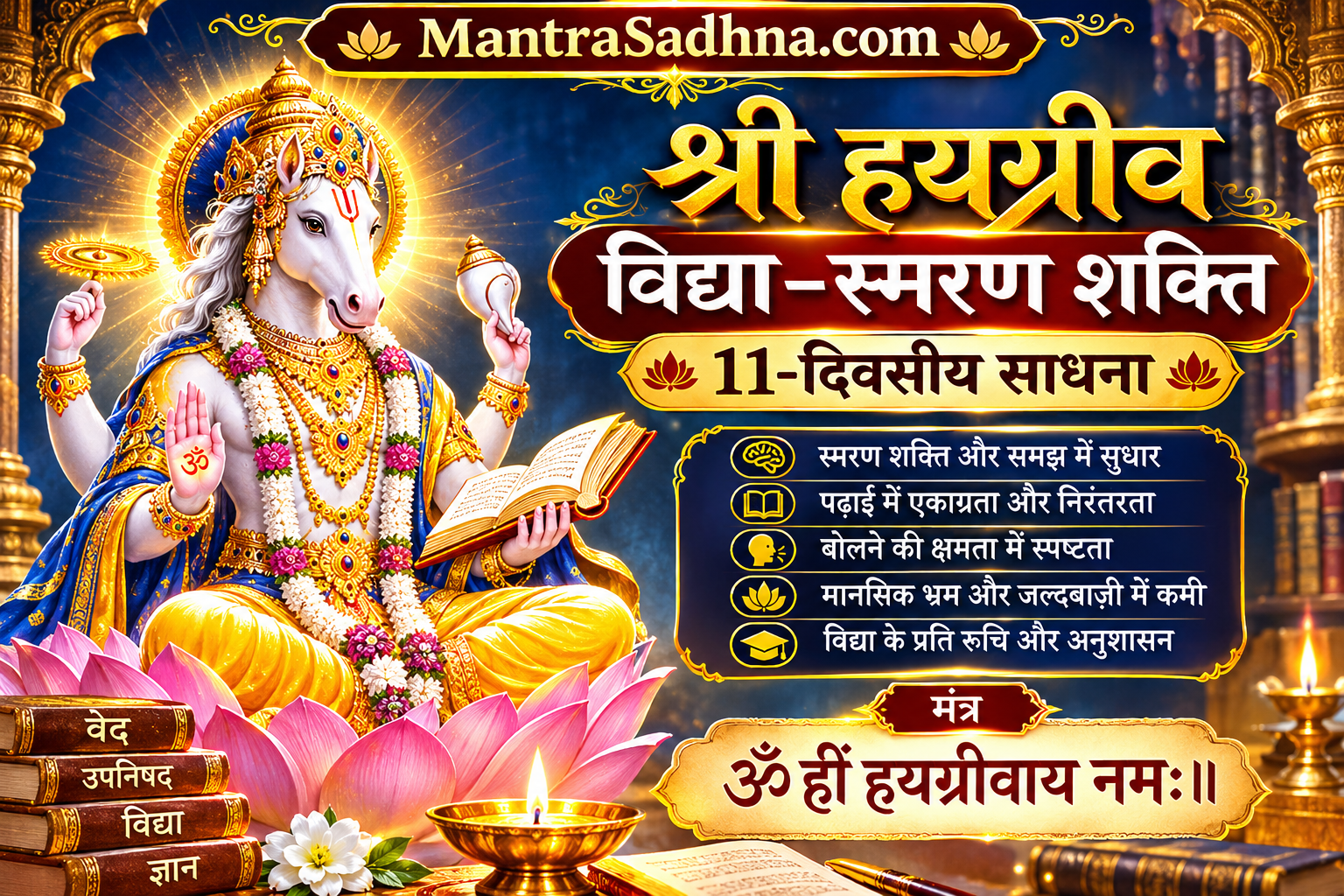
Lord Hayagriva Vidya and Memory Sadhana – Complete 11-Day Mantra, Worship Guide and Study Routine
Hayagriva Vidya and Memory Sadhana is a devotional practice associated with Lord Hayagriva, a form of Lord Vishnu revered for divine knowledge, wisdom and the protection of sacred learning.
Hayagriva worship holds a respected place in Hindu Vaishnava traditions, particularly in devotional practices connected with learning and spiritual knowledge.
Students, teachers, researchers and devotees may choose to pray to Lord Hayagriva while maintaining a disciplined study routine. This guide combines a suggested 11-day devotional schedule with practical learning habits.
The 11-day routine described here is a suggested personal devotional practice, not a universally authenticated ancient Siddhi ritual. Mantra chanting is not a proven medical treatment for memory problems and does not guarantee examination success or extraordinary intellectual abilities.
1. Who Is Lord Hayagriva?
Lord Hayagriva is traditionally regarded as a distinctive manifestation of Lord Vishnu. He is commonly represented with a human body and a horse's head.
His imagery is associated with sacred wisdom, learning, purity and spiritual understanding. Different Hindu texts and Vaishnava traditions preserve accounts connecting Hayagriva with the Vedas and the restoration or protection of sacred knowledge.
The Sri Hayagriva Stotram, attributed to the Sri Vaishnava scholar Vedanta Desika, is an important devotional composition praising Lord Hayagriva as a manifestation of knowledge.
2. Spiritual Significance of Hayagriva Worship
In Hindu spiritual thought, knowledge is often understood as more than the accumulation of facts. It also involves discernment, responsibility, humility and the wise use of what one learns.
Devotion to Lord Hayagriva may serve as a personal reminder to approach education with patience, discipline and respect.
For students, the practice can be paired with reading, revision and self-testing rather than being treated as a substitute for study.
3. Main Objectives
- Express devotion to Lord Hayagriva.
- Develop a consistent study schedule.
- Reduce unnecessary distractions during learning.
- Practice calm reflection before studying.
- Encourage revision and understanding of academic material.
- Build patience and confidence through preparation.
- Use knowledge responsibly and ethically.
4. Who May Follow This Practice?
- School and college students.
- Competitive examination candidates.
- Teachers and academic researchers.
- Writers, speakers and knowledge professionals.
- Devotees interested in Lord Vishnu's Hayagriva form.
- People seeking a structured devotional routine alongside study.
Children may follow a shorter, age-appropriate version if they wish. Participation should be voluntary.
5. Required Puja Materials
- A clean image of Lord Hayagriva or Lord Vishnu.
- A white or light-colored sitting mat.
- A safely placed ghee lamp, optional.
- Fresh white flowers or other available flowers.
- A small vessel of clean water.
- A crystal mala or ordinary prayer beads.
- A notebook and study materials.
Not every item is essential. A simple devotional prayer can be performed without flowers, lamps or special equipment.
6. Place, Direction and Time
Place: A clean and peaceful prayer or study area.
Direction: Facing east may be chosen as a traditional preference, but it is not compulsory.
Time: Morning after sunrise or another convenient quiet period.
Duration: A suggested 11-day routine.
Daily chanting: Two malas of 108 repetitions each, totaling 216 chants.
7. Lord Hayagriva Mantra
ॐ ह्रीं हयग्रीवाय नमः ॥
Transliteration: Om Hreem Hayagrivaya Namah
This mantra form may be encountered in popular devotional collections. This article does not establish its exact attribution to a particular ancient scripture. The syllable Hreem is a bija syllable, and practices involving bija mantras may differ across traditions.
Those who prefer simple name-based prayer may use Om Hayagrivaya Namah as a devotional invocation.
8. Chanting Count
| Period | Repetitions |
|---|---|
| Each day | 216 |
| First 10 days | 2,160 |
| Day 11, three malas | 324 |
| Total | 2,484 |
The additional mala on day 11 is optional. The chanting count does not guarantee special powers or academic results.
9. Suggested Sankalpa
O Lord Hayagriva, may I develop respect for learning, clarity in thought, discipline in study and wisdom in using knowledge. Help me approach education with honesty, humility and sincere effort.
10. Complete Step-by-Step Worship Method
Step 1: Prepare Yourself
Wash or bathe as convenient, wear clean clothes and choose a quiet place.
Step 2: Arrange the Prayer Space
Place an image of Lord Hayagriva in a clean location and sit comfortably.
Step 3: Offer Flowers and Light a Lamp
Offer flowers and light a lamp only if it can be used safely. Never leave an open flame unattended.
Step 4: Settle Your Attention
Spend two or three minutes breathing naturally and allowing your thoughts to settle.
Step 5: Remember Lord Hayagriva
Reflect on the deity's traditional association with wisdom, learning and spiritual knowledge.
Step 6: Chant the Mantra
Chant the selected mantra 216 times if comfortable. Use a mala or digital chanting counter to track repetitions.
Step 7: Sit Quietly
After chanting, spend approximately five minutes in quiet reflection.
Step 8: Begin Your Study Session
Choose a specific topic to study. After reading, try to recall its main points without looking at the material.
Step 9: Conclude with Gratitude
Offer a brief prayer and continue your daily responsibilities with discipline and care.
11. Suggested 11-Day Practice Schedule
Day 1: Establish your prayer and study schedule.
Day 2: Study one small topic carefully.
Day 3: Recall the previous day's material without notes.
Day 4: Summarize a topic in your own words.
Day 5: Identify difficult concepts and vocabulary.
Day 6: Explain a topic aloud as if teaching it.
Day 7: Review the week's learning.
Day 8: Solve practice questions or past papers.
Day 9: Revisit weaker areas.
Day 10: Complete a short self-test.
Day 11: Optionally chant three malas and review your progress.
This study schedule is a practical addition to the devotional routine, not a mandatory ancient religious prescription.
12. Practical Study Methods for Better Retention
Active Recall
After reading a topic, close your notes and attempt to remember the key ideas. Active recall can be an effective learning strategy.
Spaced Repetition
Review information at increasing intervals instead of relying only on last-minute revision.
Adequate Sleep
Sleep plays an important role in learning and memory-related processes. Avoid sacrificing sleep to extend study hours unnecessarily.
Distraction Management
Silence unnecessary notifications and create manageable study sessions with appropriate breaks.
Teaching What You Learn
Explaining a concept in your own words can help reveal gaps in understanding.
13. Possible Personal Experiences
Some devotees may experience a greater sense of calm, spiritual satisfaction or motivation to maintain a study routine.
- A more consistent approach to studying.
- Greater awareness of distractions.
- Motivation to review learning materials.
- A sense of gratitude and religious devotion.
- Confidence developed through preparation.
These experiences are individual and not guaranteed. Unusual dreams or visions are not required indicators of progress.
14. Are Frightening Experiences Expected?
The simple practice described here consists of prayer, mantra chanting and quiet reflection. It does not include frightening rituals.
However, anyone feeling uncomfortable, exhausted or distressed should pause the practice and rest.
15. Traditional Benefits and Beliefs
Within Hindu devotional traditions, Lord Hayagriva is associated with knowledge, wisdom and sacred learning.
Devotees may pray for guidance in education, clarity of understanding and the responsible use of knowledge.
Such religious beliefs should not be confused with medically established improvements in memory or cognition.
16. What to Do After the 11 Days
- Continue a short daily prayer if desired.
- Chant one mala or fewer repetitions before studying.
- Offer a brief prayer before an examination or interview.
- Maintain consistent revision and practice tests.
- Use evidence, reflection and good judgment when making important decisions.
17. Important Precautions
- Do not replace studying with mantra chanting.
- Do not expect guaranteed examination results.
- Avoid sacrificing sleep or health to meet chanting targets.
- Use lamps and incense safely.
- Respect traditional guidance for specialized initiation-based practices.
- Seek medical advice for persistent or worsening memory problems.
- Be cautious of anyone promising guaranteed Siddhi or extraordinary memory powers.
18. Frequently Asked Questions
Q1. Can students practice Hayagriva Sadhana?
Yes. Students may follow a simple devotional routine according to their personal beliefs and available time.
Q2. Does the Hayagriva mantra improve memory?
Hayagriva is traditionally associated with learning and wisdom. However, chanting has not been reliably established as a treatment or guaranteed method for improving memory.
Q3. Is 11 days the compulsory duration?
No. Eleven days is the suggested duration of this personal routine, not a universally prescribed Siddhi period.
Q4. What if I miss a day?
You may continue your personal devotional practice the following day or begin a new schedule if you prefer.
Q5. Is a guru required?
Simple devotional prayer can be practiced independently. Specialized initiation-based mantra practices may require qualified traditional guidance.
Q6. Can women follow this practice?
Yes. Simple Hayagriva devotional worship may be practiced by women and men.
Q7. Is a crystal mala compulsory?
No. An ordinary mala or digital chanting counter can also be used.
Q8. Can I chant before an examination?
Yes, if you wish. Keep the prayer brief and prioritize preparation, sleep and arriving on time.
Q9. Must I chant three malas on day 11?
No. The additional mala is optional.
Q10. Is this a treatment for memory loss?
No. This is a religious practice, not medical treatment. Persistent or worsening memory difficulties may require professional assessment.
19. Conclusion
Lord Hayagriva is a respected symbol of wisdom and sacred knowledge within Hindu Vaishnava traditions.
The suggested 11-day practice brings together devotion, reflection and disciplined study. Its central message is to approach learning with humility, consistent effort and responsible use of knowledge.
Spiritual devotion and practical learning habits can coexist without treating religious practice as a guarantee of academic success.
॥ ॐ श्री हयग्रीवाय नमः ॥