 Mantra
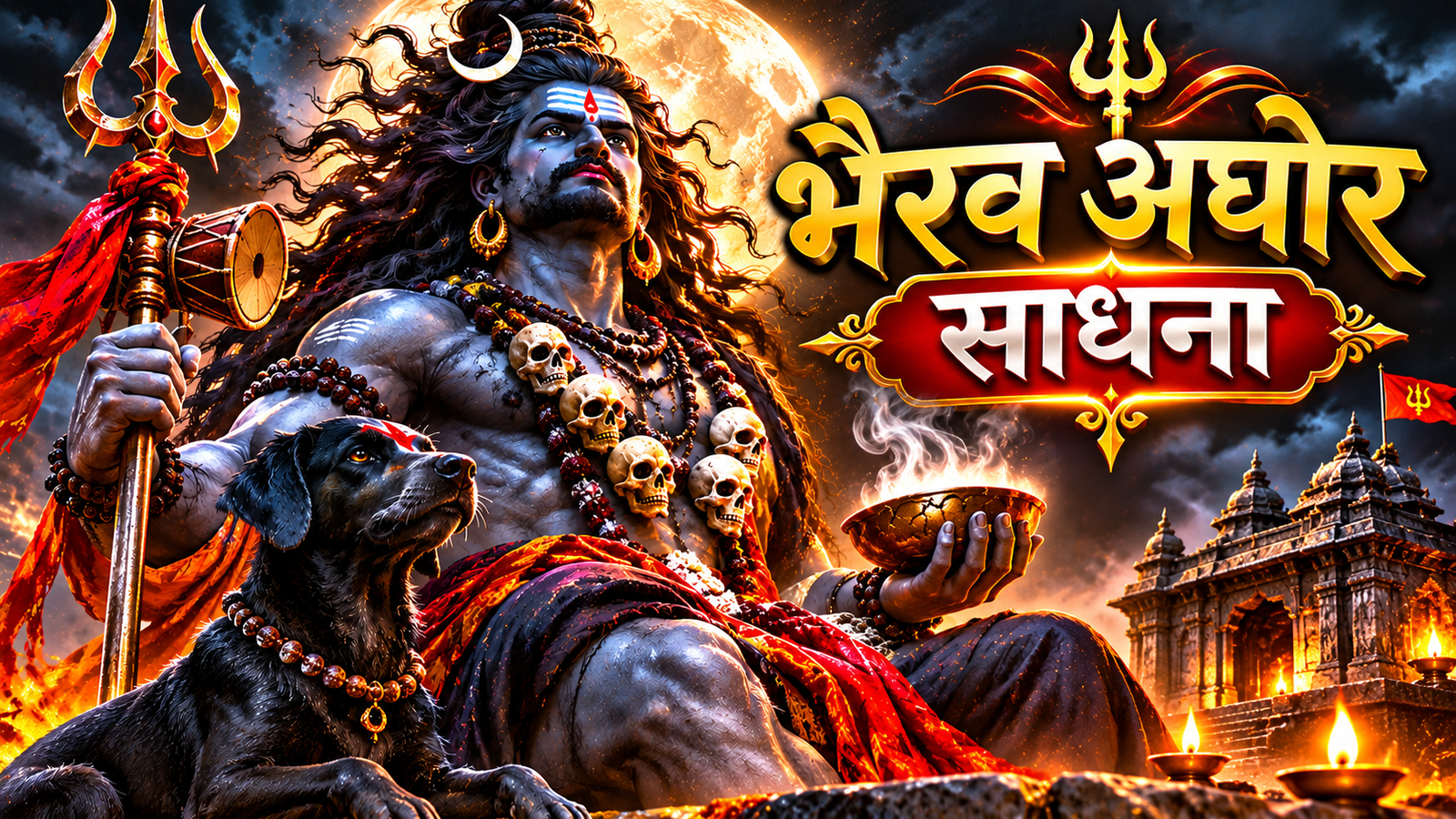
🔥🐺 Bhairav Aghor Sadhana – 21-Day Practice, Sacred Mantras and Spiritual Experiences 🐺🔥
Lord Bhairav is revered in Shaiva and Shakta traditions as a powerful form of Lord Shiva. He is associated with time, protection, spiritual awareness, discipline and the courage to confront fear.
Known by names such as Kaal Bhairav, Batuk Bhairav and Kshetrapal, Lord Bhairav occupies an important place in Hindu devotional and Tantric traditions.
Bhairav Aghor Sadhana refers broadly to spiritual practices associated with Bhairav worship and Aghor traditions. However, these traditions have different lineages, rituals and requirements.
The 21-day routine presented here is a simple devotional chanting practice. It is not a substitute for initiation into an established Aghor lineage or a claim of guaranteed supernatural attainment.
❖ Who Is Lord Kaal Bhairav?
Kaal Bhairav is traditionally regarded as a fierce manifestation of Lord Shiva. He is especially associated with Kashi, where devotees honor him as the divine guardian of the sacred city.
Traditional representations may include a trident, drum, skull and dog. The dog is widely recognized as an animal associated with Bhairav.
These symbols can inspire reflection on impermanence, vigilance, courage, humility and spiritual responsibility.
🐺 Understanding the Aghor Tradition
Aghor spiritual traditions often emphasize overcoming fear, attachment, aversion and rigid distinctions.
Some specialized Aghor practices involve initiation, lineage-specific instruction and complex rituals. Such practices should not be confused with ordinary devotional prayer.
For general worshippers, simple Bhairav mantra chanting, prayer, contemplation and ethical conduct offer a more accessible devotional approach.
🔱 Main Objectives of Bhairav Sadhana
- Expressing devotion to Lord Bhairav.
- Developing courage when facing challenges.
- Practicing concentration and mental discipline.
- Reflecting on the value of time and responsibility.
- Seeking spiritual reassurance through prayer.
- Practicing self-control and patience.
- Strengthening commitment to ethical conduct.
🕉️ Main Kaal Bhairav Mantra
A simple mantra used in devotional remembrance of Lord Kaal Bhairav is:
॥ ॐ कालभैरवाय नमः ॥
Transliteration: Om Kaal Bhairavaya Namah.
Meaning: I offer my respectful salutations to Lord Kaal Bhairav.
This mantra may be recited as a prayer for courage, wisdom, discipline and spiritual strength.
🔥 Batuk Bhairav Apaduddharana Mantra
Batuk Bhairav worship includes traditional mantras associated with prayers for assistance during difficulties.
One commonly encountered version is:
॥ ॐ ह्रीं बटुकाय आपदुद्धारणाय कुरु कुरु बटुकाय ह्रीं ॥
Transliteration: Om Hrim Batukaya Apaduddharanaya Kuru Kuru Batukaya Hrim.
Different sources preserve variations in the seed syllables and endings. Some versions include additional syllables such as Phat or Svaha.
For formal ritual use, practitioners should follow the version established within their own spiritual lineage.
The devotional intention is to seek divine support during difficult circumstances. Immediate protection or the elimination of all problems cannot be guaranteed.
🌑 The Importance of Kaal Bhairav Ashtakam
Kaal Bhairav Ashtakam is a well-known Sanskrit hymn traditionally attributed to Adi Shankaracharya.
It praises Lord Kaal Bhairav as the divine guardian and lord of Kashi.
देवराजसेव्यमानपावनाङ्घ्रिपङ्कजं
व्यालयज्ञसूत्रमिन्दुशेखरं कृपाकरम्।
नारदादियोगिवृन्दवन्दितं दिगम्बरं
काशिकापुराधिनाथकालभैरवं भजे॥
This is a commonly recited opening verse. Published editions may contain minor textual variations.
🪔 Materials for Bhairav Worship
- An image of Lord Kaal Bhairav or Batuk Bhairav.
- A clean and comfortable sitting mat.
- A safely placed mustard oil or ghee lamp.
- Clean water and flowers.
- A Rudraksha mala or chanting counter.
- Optional incense.
- A quiet prayer space.
- Paper for recording personal reflections.
Elaborate materials are not necessary for ordinary devotional chanting.
🌙 Best Time and Duration
Some Bhairav worship traditions attach special significance to nighttime, Kalashtami, Tuesdays and Sundays.
However, ordinary devotional chanting can also be performed during a peaceful morning or evening.
A practitioner may choose an 11-day, 21-day or 41-day routine according to personal convenience.
There is no need to sacrifice sleep or stay awake until midnight for general devotional prayer.
🙏 Opening Prayer and Intention
Before beginning, offer a simple prayer:
O Lord Kaal Bhairav, I remember you with devotion. May this practice inspire courage, wisdom, self-discipline and the strength to follow a righteous path.
🔱 Simple Step-by-Step Chanting Method
🌺 Prepare the Prayer Area
Clean your chosen space, place an image of Lord Bhairav if desired and light a lamp safely.
🌺 Sit Comfortably
Sit on a comfortable mat and allow your breathing to remain natural. Avoid physical strain or forced breathing techniques.
🌺 Remember Lord Bhairav
Reflect on Lord Bhairav as a symbol of courage, vigilance, spiritual discipline and righteous protection.
🌺 Begin Mantra Chanting
For a simple daily practice, repeat the following mantra 11, 21 or 108 times:
॥ ॐ कालभैरवाय नमः ॥
Specialized seed-mantra rituals should follow qualified traditional guidance.
🌺 Complete the Prayer
Offer gratitude, sit quietly for a few moments and renew your intention to practice courage, kindness and responsibility.
🌑 Days 1–3: Beginning the Practice
The first few days can be devoted to establishing a regular prayer routine.
- Learn the pronunciation of the chosen mantra.
- Practice sitting quietly.
- Reflect on personal fears and concerns.
- Record thoughts after chanting.
Some people may experience calm or emotional reassurance. Feeling an invisible presence is neither required nor evidence of spiritual attainment.
🐺 Days 4–7: Reflection and Dreams
As the routine continues, practitioners may become more aware of their thoughts and dreams.
Dreams involving dogs, temples, bells or other religious imagery may reflect personal beliefs and experiences.
Because dogs are traditionally associated with Bhairav, some devotees attach symbolic significance to such dreams. However, dreams cannot establish that a deity has appeared or that a spiritual milestone has been reached.
- Continue chanting regularly.
- Maintain adequate sleep.
- Approach dreams without fear.
- Reflect on religious symbolism calmly.
⚡ Days 8–12: Courage and Self-Discipline
This phase can focus on applying the values of devotion in everyday life.
- Complete responsibilities on time.
- Practice patience during disagreements.
- Face challenges with practical planning.
- Return attention gently to the mantra whenever the mind wanders.
Changes in voice, unusual sensations, brighter-looking eyes or animal behavior should not be treated as proof of mantra siddhi.
🔥 Days 13–18: Facing Obstacles
Instead of expecting obstacles to disappear automatically, use this period to review unfinished tasks and take constructive action.
- Identify delayed responsibilities.
- Improve communication with others.
- Make thoughtful career and financial decisions.
- Seek peaceful solutions to conflicts.
Chanting does not guarantee that opponents will become powerless or that external circumstances will change.
🩸 Days 19–21: Completion and Self-Evaluation
During the final days, reflect on the personal value of the routine.
- Have you practiced more consistently?
- Have you become more aware of your fears?
- Are you making decisions more carefully?
- Have you strengthened your commitment to ethical behavior?
Seeing shadows, flashes of light, or sensing touch or a nearby presence is not an established sign of spiritual attainment.
If unusual perceptions repeatedly occur, cause fear or interfere with sleep or daily functioning, discontinue the practice and seek medical guidance.
🌼 Traditional Benefits of Bhairav Worship
- Devotional connection with Lord Bhairav.
- Encouragement to develop courage and confidence.
- Regular concentration practice.
- Greater awareness of time and responsibility.
- Motivation to respond patiently to difficulties.
- Spiritual reassurance through prayer.
- Reflection on ethical conduct and self-discipline.
No mantra can be guaranteed to cure illness, eliminate anxiety, defeat enemies or produce financial success.
⚠️ Important Precautions
- Do not attempt complex Tantric or Aghor rituals without qualified guidance.
- Avoid sleep deprivation, harmful fasting or physical hardship.
- Never use spiritual practices to threaten or harm another person.
- Use lamps and incense safely.
- Do not interpret unusual sensations as automatic proof of supernatural powers.
- Do not fear negative consequences if you miss a day.
- Seek appropriate medical, legal or financial assistance when needed.
❓ Frequently Asked Questions
❖ What is Bhairav Aghor Sadhana?
It is a broad term for spiritual practices associated with Lord Bhairav and Aghor traditions. Specific methods vary by lineage. This article describes a simple devotional routine.
❖ Can Bhairav Siddhi be achieved in 21 days?
There is no universally established rule guaranteeing spiritual attainment after 21 days. The period may be used for regular chanting and reflection.
❖ What is a simple Kaal Bhairav mantra?
Om Kaal Bhairavaya Namah is a simple devotional mantra.
❖ Is nighttime chanting mandatory?
No. General devotional chanting can be performed in the morning or evening.
❖ Does dreaming about a dog indicate Bhairav Siddhi?
No. Dogs are traditionally associated with Lord Bhairav, but dreams are not reliable proof of spiritual attainment.
❖ Can I chant without a guru?
Simple devotional name-chanting can be practiced independently. Advanced Tantric rituals should follow qualified traditional instruction.
❖ Does Bhairav worship eliminate enemies?
There is no guaranteed supernatural outcome. The practice may instead be approached as a source of devotion and encouragement toward courage, patience and ethical action.
🙏 Closing Prayer to Lord Kaal Bhairav
O Lord Kaal Bhairav,
Inspire courage in my heart.
Guide me toward wisdom and patience.
Help me face life's challenges responsibly.
May my actions remain guided by righteousness.
May peace and compassion flourish in my life.
Jai Kaal Bhairav.
🌺 Conclusion
Bhairav Aghor Sadhana can be approached as a spiritual practice centered on devotion, courage, self-discipline and reflection.
A 21-day chanting routine may provide an opportunity to cultivate consistency and examine personal habits. Supernatural experiences should not be considered necessary goals.
॥ Jai Shri Kaal Bhairav ॥
Disclaimer: This article is provided for religious, cultural and educational purposes. The daily stages described are suggestions for personal reflection, not verified stages of supernatural attainment.