 Mantra
Hanuman Mental Protection and Reputation Sadhana – Complete 11-Day Mantra, Puja Method, Benefits and Precautions
❖ Introduction
Lord Hanuman is one of the most revered deities in Hinduism. He represents strength, courage, wisdom, devotion, humility, discipline, and unwavering loyalty to Lord Rama.
His character in the Ramayana inspires devotees to remain courageous during difficult circumstances while acting with intelligence, patience, and a strong sense of duty.
In everyday life, people sometimes experience fear, social criticism, misunderstandings, reputational concerns, emotional pressure, or a lack of confidence.
During such situations, devotional prayer and personal reflection may provide comfort and encourage a more balanced response.
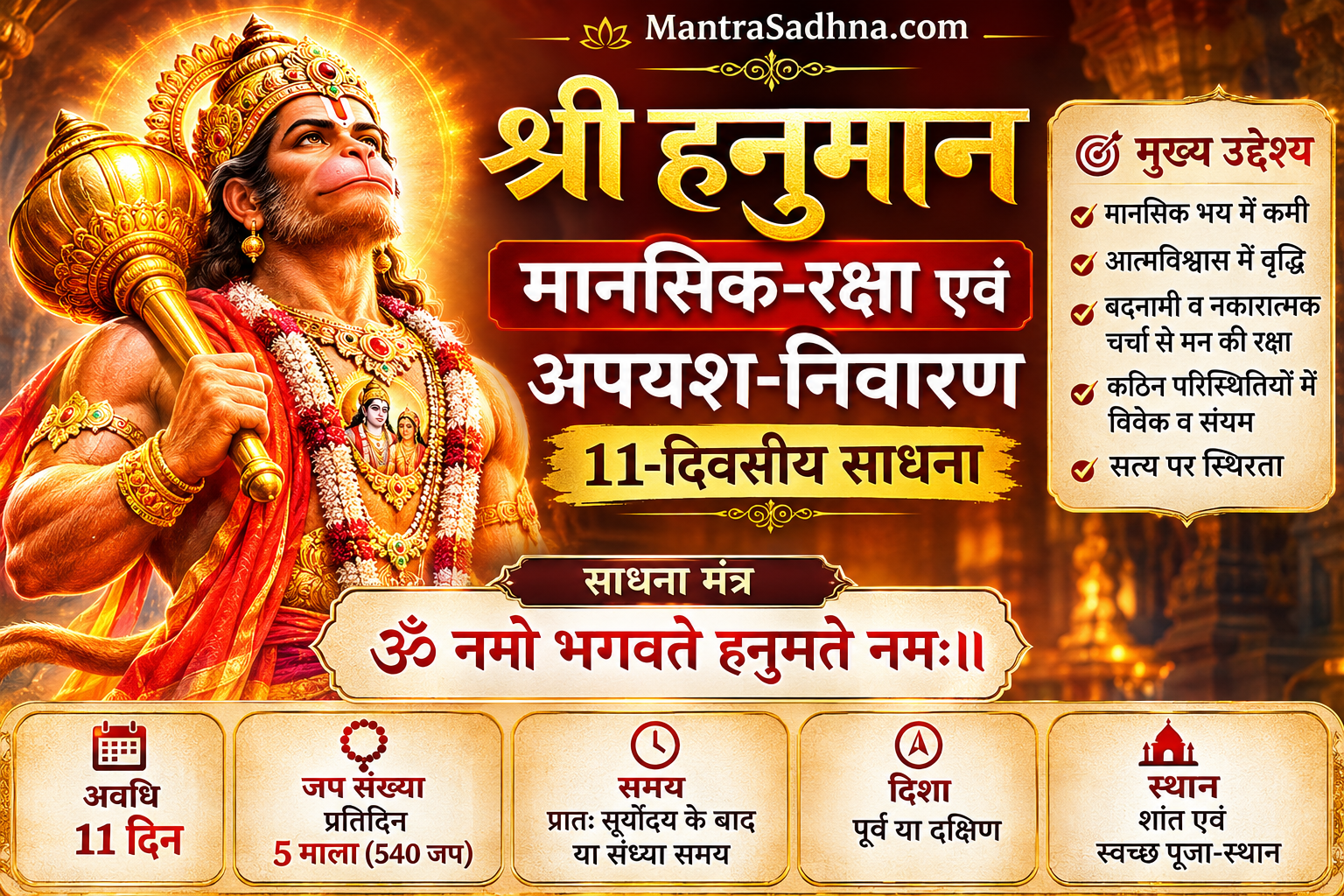
Hanuman Mental Protection and Reputation Sadhana is presented here as an 11-day devotional routine combining mantra chanting, prayer, gentle reflection, and practical self-development.
Its primary purpose is to encourage courage, self-control, honesty, and thoughtful decision-making.
This practice is not intended to prevent lawful proceedings, erase legitimate accusations, control other people's opinions, or guarantee supernatural protection.
Important: The specific 11-day routine described in this article is a suggested devotional program. It has not been established here as a mandatory ancient ritual documented in a particular scripture.
❖ Spiritual Significance of Lord Hanuman
Hanuman worship holds an important place in Hindu devotional traditions.
In the Ramayana, Hanuman demonstrates exceptional courage, devotion, intelligence, and humility.
His journey in search of Sita symbolizes determination and dedication to duty.
His devotion to Lord Rama represents loyalty, service, and spiritual commitment.
For devotees, these stories offer lessons about balancing strength with humility and courage with wisdom.
❖ What Does Mental Protection Mean?
In this guide, mental protection refers to developing a more balanced response to difficult thoughts, emotions, and stressful circumstances.
People may experience anxiety when facing criticism, uncertainty, conflict, or social pressure.
Remembering Hanuman's qualities may encourage some devotees to approach these challenges with courage and patience.
However, mantra chanting is not an established medical treatment for anxiety disorders or other mental health conditions.
Spiritual practice should complement, rather than replace, appropriate professional support when necessary.
❖ Understanding Reputation Protection
Reputation-related concerns may arise from misunderstandings, rumors, public criticism, or false information.
Such experiences can be emotionally difficult, particularly when they affect relationships or professional life.
Prayer may offer personal reassurance, but it does not automatically remove misinformation or change another person's behavior.
Practical steps such as documenting facts, communicating appropriately, seeking trusted support, and obtaining legal advice when necessary may be important.
This devotional routine encourages the courage and composure needed to approach such situations responsibly.
❖ Main Objectives of the Sadhana
- Encourage courage during difficult circumstances.
- Develop a consistent devotional routine.
- Practice emotional self-control.
- Reflect on honesty and truthfulness.
- Improve awareness of personal reactions.
- Reduce impulsive responses to criticism.
- Encourage patient and respectful communication.
- Support practical problem-solving.
❖ Who May Find This Practice Helpful?
This devotional routine may appeal to people who:
- Feel troubled by social criticism or misunderstandings.
- Wish to develop greater personal confidence.
- Want to strengthen their devotion to Lord Hanuman.
- Seek a consistent prayer routine.
- Want to respond more calmly during disagreements.
- Value honesty, discipline, and self-reflection.
Persistent anxiety, panic symptoms, or emotional distress affecting everyday life should be assessed by a qualified healthcare professional.
❖ Materials Required
- A clean image or idol of Lord Hanuman.
- A red or saffron-colored meditation mat, if desired.
- A small ghee or sesame-oil lamp, if safe.
- Optional red flowers.
- A rudraksha or ordinary prayer mala.
- A small container of clean water.
- Optional fruit or other simple devotional offerings.
- A notebook and pen for reflection.
Expensive materials, specialized ritual instruments, and complex ceremonies are not necessary for this simple devotional routine.
❖ Best Time, Place, Direction and Duration
Place: A quiet, clean, and safe prayer area at home.
Time: Morning after sunrise or a convenient evening period.
Direction: Facing east may be a personal religious preference, but is not mandatory for this routine.
Duration: A suggested 11-day practice.
Starting Day: Tuesday or Saturday may be chosen according to personal devotion. Any convenient day is acceptable.
Missing a day does not mean that something harmful will happen. The practice may be resumed without fear.
❖ Hanuman Mental Protection Mantra
॥ ॐ नमो भगवते हनुमते नमः ॥
Om Namo Bhagavate Hanumate Namah
This mantra may be used as a devotional salutation to Lord Hanuman.
Its general meaning is a respectful offering of reverence to Lord Hanuman.
While chanting, devotees may reflect on Hanuman's courage, devotion, humility, intelligence, and truthfulness.
The mantra is not presented here as a verified formula guaranteeing the removal of reputational problems or supernatural protection.
❖ Suggested Chanting Count
The original proposed routine recommends five malas each day.
- One mala: Usually 108 repetitions.
- Five malas: 540 repetitions.
- Eleven days at five malas daily: 5,940 repetitions.
These numbers are optional devotional targets rather than mandatory requirements.
Beginners may choose 11, 21, or 108 repetitions according to their comfort.
No specific chanting count guarantees freedom from fear, removal of rumors, or supernatural siddhi.
❖ Sankalpa or Devotional Intention
Before beginning, devotees may offer the following prayer:
"O Lord Hanuman, inspire me with courage, wisdom, patience, and devotion to truth. May I remain calm during difficult situations, fulfill my responsibilities, and respond with honesty and good judgment rather than fear, anger, or revenge."
❖ Complete Step-by-Step Hanuman Sadhana Method
Step 1 – Personal Preparation
Wash appropriately, wear clean clothing, and prepare a comfortable prayer space.
Step 2 – Sit Comfortably
Sit on a clean mat and place an image or idol of Lord Hanuman in front of you.
Step 3 – Offer a Lamp and Flowers
If it is safe, light a small devotional lamp and offer flowers according to your tradition.
Keep the flame away from curtains, children, and flammable objects.
Step 4 – Remember Lord Rama and Hanuman
Spend a few moments reflecting on Lord Rama and Hanuman.
Remember Hanuman's devotion, courage, intelligence, and spirit of service.
Step 5 – Gentle Breath Awareness
Observe your natural breathing for two or three minutes.
There is no need to hold your breath or perform difficult breathing exercises.
Step 6 – Chant the Mantra
Om Namo Bhagavate Hanumate Namah
Repeat the mantra gently according to your chosen count.
Avoid rushing or creating pressure to complete a particular number.
Step 7 – Symbolic Mental Protection Meditation
Imagine yourself remaining calm and courageous during a challenging situation.
Reflect on Hanuman's qualities and consider how you can respond with truthfulness, patience, and wisdom.
This is a symbolic visualization exercise rather than scientific evidence of an invisible protective shield.
Step 8 – Silent Reflection
After chanting, sit quietly for two or three minutes.
Consider one practical and appropriate action that may help you address your current concern.
Step 9 – Closing Prayer
Offer a final prayer for courage, good judgment, self-control, and the well-being of others.
❖ Complete 11-Day Practice Schedule
Day 1 – Intention and Beginning
Begin with a peaceful prayer. Write down your main concern and the purpose of your devotional practice.
Day 2 – Understanding Fear
Identify situations that create worry and distinguish between factors within and outside your control.
Day 3 – Developing Courage
Reflect on Hanuman's courage and choose one small challenge to approach calmly.
Day 4 – Truthfulness
Make a conscious effort to communicate honestly and act responsibly.
Day 5 – Self-Control in Speech
Practice avoiding impulsive or angry responses during criticism and disagreement.
Day 6 – Personal Confidence
Remember your strengths and previous accomplishments. Set one realistic personal goal.
Day 7 – Resolving Misunderstandings
If appropriate and safe, consider respectful communication with someone involved in a misunderstanding.
Day 8 – Patience
Practice maintaining composure even when a difficult situation does not improve immediately.
Day 9 – Supportive Relationships
Consider seeking advice or emotional support from trusted family members, friends, or professionals.
Day 10 – Personal Review
Review your journal and reflect on changes in your reactions, communication, and confidence.
Day 11 – Completion
Offer a closing prayer to Lord Hanuman and renew your commitment to honesty, patience, courage, and thoughtful behavior.
Completing 11 days does not guarantee supernatural powers or the resolution of external problems.
❖ Possible Experiences During the Practice
- Finding personal comfort in regular prayer.
- Becoming more aware of thoughts and reactions.
- Practicing calm responses during stressful situations.
- Feeling inspired to develop confidence.
- Reflecting more deeply on courage and service.
- Occasionally experiencing distraction or restlessness.
Individual experiences vary and should not be considered proof of supernatural attainment.
❖ Frightening or Uncomfortable Experiences
Some people may experience restlessness, distracting thoughts, or memories of stressful events during meditation.
Such experiences are not reliable evidence of negative spiritual forces.
If the practice increases anxiety, reduce the duration or pause it.
Persistent panic symptoms, sleep disturbances, or significant emotional distress should be discussed with a qualified healthcare professional.
❖ Traditional and Personal Benefits
Hanuman devotion is traditionally associated with courage, strength, loyalty, service, and fearlessness.
This routine encourages reflection on qualities such as:
- Courage and patience.
- Self-control and good judgment.
- Honesty and responsibility.
- Personal confidence and dignity.
- Respectful communication.
- Consistent devotional practice.
These are personal development goals and possible experiences, not guaranteed medical or supernatural outcomes.
❖ What to Do When Facing Rumors or Defamation
When a person is affected by misinformation, rumors, or reputational harm, practical action may be necessary.
- Verify information before responding.
- Preserve relevant evidence and records.
- Communicate calmly when it is appropriate and safe.
- Avoid impulsive social media arguments.
- Seek support from trusted individuals.
- Consider legal advice when facing serious defamation, threats, or harassment.
Hanuman devotion may be approached as a source of personal courage while taking appropriate real-world steps.
❖ How to Continue After Completing 11 Days
After completing the routine, devotees may continue simple prayer according to their personal preferences.
During difficult moments, a brief period of quiet reflection and remembrance of Lord Hanuman may provide personal reassurance.
Continue taking practical steps to address problems and maintain responsible behavior.
There is no guarantee that chanting a particular number of repetitions will automatically change social circumstances.
❖ Important Precautions
- Do not use the practice to avoid lawful proceedings.
- Maintain honesty and personal responsibility.
- Avoid anger, arrogance, and revenge.
- Do not pressure yourself to complete excessive chanting.
- Do not neglect sleep, nutrition, or daily responsibilities.
- Never leave a burning lamp unattended.
- Continue necessary medical or mental health treatment.
- Do not fear supernatural punishment if a day is missed.
❖ Is a Guru Necessary?
Simple devotional prayer, remembrance of Lord Hanuman, and gentle reflection do not universally require formal Tantric initiation.
However, specialized initiation-based mantras and complex rituals should be learned according to the requirements of the relevant religious tradition.
❖ Frequently Asked Questions (FAQ)
1. What is Hanuman Mental Protection Sadhana?
It is presented here as a suggested 11-day devotional routine focused on prayer, courage, self-reflection, and emotional resilience.
2. What is the mantra for this practice?
The mantra used in this guide is "Om Namo Bhagavate Hanumate Namah," a devotional salutation to Lord Hanuman.
3. Can the practice remove fear within 11 days?
There is no guarantee that fear or anxiety will disappear within a particular period. Persistent symptoms may require professional support.
4. Can chanting remove defamation or rumors?
There is no reliable evidence that chanting automatically removes misinformation or changes external circumstances. Practical action is important.
5. How many malas should be chanted daily?
The suggested routine includes five malas, or 540 repetitions, but beginners may choose fewer repetitions.
6. Is Tuesday compulsory for starting?
No. Tuesday or Saturday may be chosen as a matter of personal devotion.
7. Can beginners practice without a guru?
Simple devotional prayer may be practiced without formal initiation. Specialized rituals may have different requirements.
8. Is lighting a lamp mandatory?
No. A lamp is optional and should only be used when it is safe.
9. What happens if a day is missed?
Missing a day does not mean that something harmful will happen. Resume the routine when convenient.
10. Can Hanuman Chalisa be recited?
Yes. Devotees may recite the Hanuman Chalisa according to their faith and tradition.
11. Can students follow this routine?
Students may participate in age-appropriate short devotional practices without neglecting sleep, education, or health.
12. Are frightening dreams a sign of spiritual activity?
No. Dreams can be influenced by stress, sleep patterns, and other factors. They are not reliable evidence of spiritual danger or attainment.
13. Can this practice guarantee victory over enemies?
Hanuman devotion carries religious symbolism of courage and righteousness, but chanting does not guarantee control over other people or victory in external disputes.
14. Is the practice safe?
Gentle prayer and reflection are generally low-risk for many people, but discomfort or increased anxiety should be taken seriously.
15. What should be done after completion?
Continue truthful conduct, practical problem-solving, personal reflection, and devotional prayer according to your preference.
❖ Conclusion
Hanuman Mental Protection and Reputation Sadhana emphasizes courage, honesty, patience, self-control, and wise decision-making.
Lord Hanuman's character teaches that strength should be accompanied by humility, courage by intelligence, and devotion by responsible action.
This 11-day routine may be approached as a personal devotional and self-development practice rather than a promise of supernatural protection or guaranteed external results.
Faith, practical judgment, personal responsibility, and appropriate professional support can all have important roles in navigating difficult circumstances.
Jai Shri Ram!
Jai Bajrangbali!
Disclaimer: This article provides general religious, cultural, and spiritual information. The 11-day routine is not presented as an authenticated ancient ritual for guaranteed spiritual attainment. Mantra chanting does not guarantee the removal of defamation, prevention of legal action, or treatment of mental health conditions. Seek qualified professional assistance for persistent anxiety, panic symptoms, legal concerns, or other serious problems.