 Mantra
🦁 Maa Pratyangira Sadhana – Complete Mantra, Puja Vidhi, Spiritual Benefits, Rules and Precautions
Maa Pratyangira is a powerful and revered goddess worshipped in certain Shakta and Tantric traditions of Hinduism. She is widely recognized for her extraordinary lion-faced appearance, fierce divine symbolism, and association with protection, courage, spiritual strength, and the destruction of negative tendencies.
In Hindu religious traditions, Maa Pratyangira is often associated with the protective aspect of Divine Mother Shakti. Her worship is particularly significant in some South Indian temple traditions and specific Tantric lineages.
Devotees approach Maa Pratyangira with prayers for courage, protection, peace, self-discipline, and spiritual guidance. However, it is important to understand that ordinary devotional worship and advanced Tantric rituals are different practices.
This comprehensive guide explains the spiritual significance of Maa Pratyangira, her traditional symbolism, devotional mantras, simple home worship, required materials, spiritual beliefs, precautions, the importance of a qualified guru, and answers to frequently asked questions.
Important Notice: Advanced Tantric practices involving initiation-specific mantras, nyasa, specialized fire rituals, or other complex procedures should only be undertaken under the guidance of a qualified teacher within an established tradition.
❖ Who Is Maa Pratyangira?
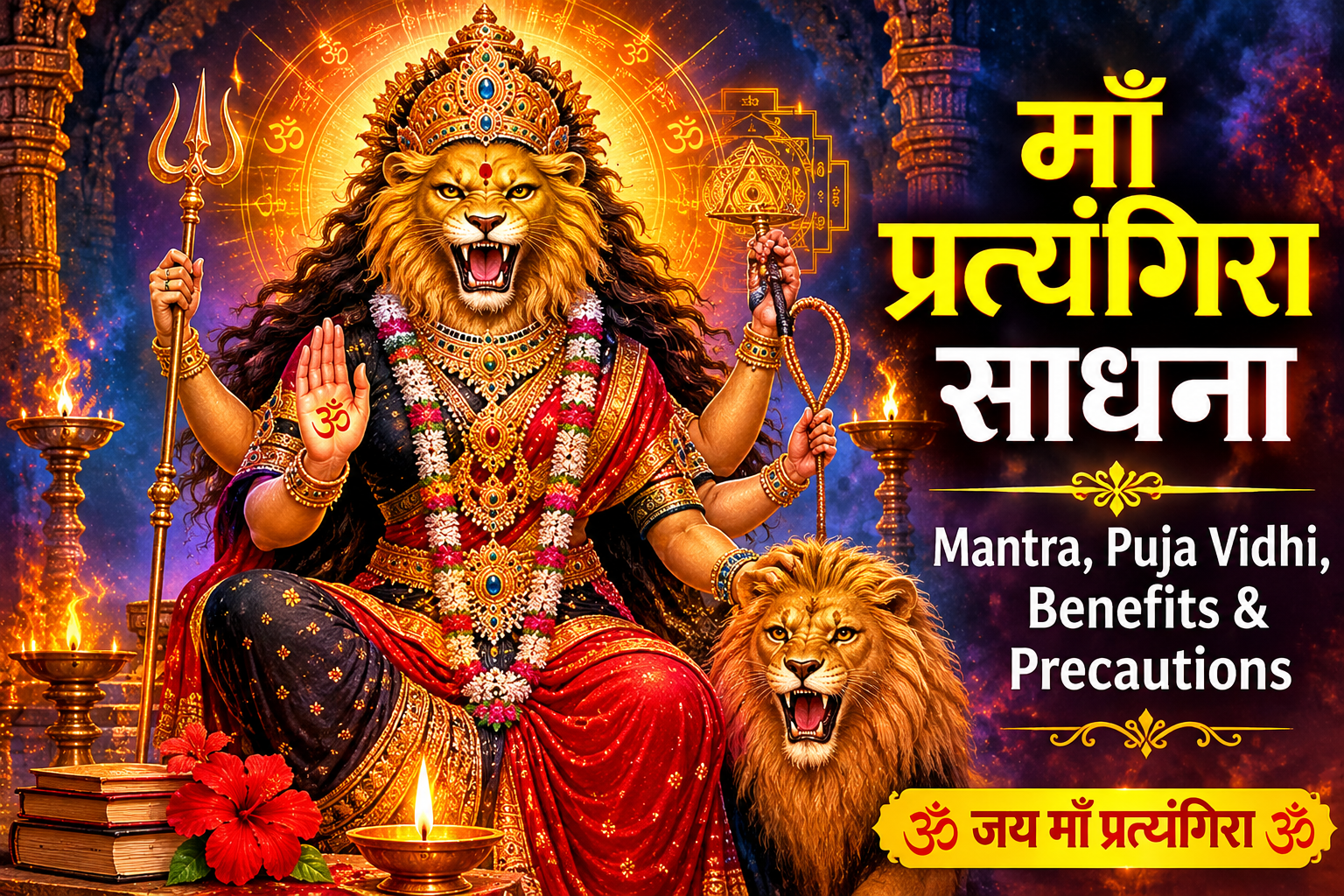
Maa Pratyangira is a fierce goddess associated with certain Hindu Shakta and Tantric traditions. She is commonly depicted with the face of a lion and the body of a divine feminine figure.
Her appearance symbolizes fearlessness, spiritual power, divine protection, and the ability to confront destructive forces.
In some traditions, Maa Pratyangira is associated with Atharvana Bhadrakali. Certain traditions also connect her symbolism with Narasimhi and other fierce manifestations of Shakti. However, these identifications and theological interpretations are not identical across all religious lineages.
The goddess is worshipped as a symbol of strength, righteous action, and the protective nature of Divine Mother.
❖ Mythological Origins of Maa Pratyangira
Different religious traditions describe the appearance and significance of Maa Pratyangira through various mythological narratives.
Some traditional accounts associate her manifestation with the fierce energy of Lord Narasimha and the Sharabha form of Lord Shiva.
In these narratives, the goddess represents a divine power capable of restoring balance when destructive anger and uncontrolled forces threaten harmony.
Other traditions emphasize her independent identity as a fierce manifestation of Shakti.
These narratives are part of religious mythology and theological interpretation. They should not be presented as historically or scientifically established events.
❖ Divine Appearance and Symbolism
Traditional depictions of Maa Pratyangira often include several distinctive symbolic features.
- Lion Face: Represents courage, fearlessness, and formidable strength.
- Divine Feminine Form: Symbolizes the creative and protective aspects of Shakti.
- Fiery Aura: Represents spiritual intensity and transformation.
- Weapons: Symbolize the defense of righteousness and opposition to injustice.
- Fierce Expression: Represents the power to confront destructive tendencies.
- Divine Ornaments: Express sacred authority and spiritual significance.
Although her appearance may seem intimidating, devotees interpret her fierce form as an expression of protective divine strength rather than uncontrolled aggression.
❖ Spiritual Significance of Maa Pratyangira Worship
Within devotional traditions, Maa Pratyangira worship is associated with the following spiritual intentions:
- Seeking courage during difficult circumstances.
- Praying for the well-being and protection of family members.
- Developing patience and emotional resilience.
- Strengthening personal discipline.
- Seeking spiritual guidance and wisdom.
- Encouraging righteous and responsible actions.
- Cultivating devotion toward Divine Mother.
- Reflecting on fear, anger, and negative thought patterns.
These are traditional devotional intentions, not guaranteed supernatural outcomes.
❖ Traditional Benefits of Maa Pratyangira Sadhana
🛡️ 1. Prayer for Divine Protection
Devotees traditionally worship Maa Pratyangira while praying for protection from difficulties, hostility, and harmful circumstances.
This belief provides a spiritual framework through which devotees may express hope, faith, and a sense of reassurance.
🦁 2. Courage and Inner Strength
The lion-faced form of the goddess symbolizes fearlessness. Reflecting on this symbolism may encourage devotees to approach challenges with determination and self-control.
🌺 3. Spiritual Discipline
Regular prayer and devotional routines may help practitioners maintain consistency in their spiritual lives.
🏠 4. Family Peace and Well-Being
Many devotees pray to Maa Pratyangira for harmony, safety, and positive relationships within their families.
🔥 5. Protection From Negative Influences
Some Tantric traditions associate the goddess with protection from alleged occult or harmful spiritual influences.
These are religious beliefs. There is no reliable scientific evidence establishing supernatural attacks or the ability of rituals to remove them.
🧘 6. Emotional Resilience
Quiet prayer, reflection, and a disciplined routine may help some individuals feel calmer and more focused. Experiences vary, and devotional practice is not a substitute for mental health treatment.
⚖️ 7. Inspiration to Follow Righteous Conduct
The goddess's fierce symbolism may remind devotees to oppose injustice through ethical, peaceful, and lawful means.
Note: The benefits described above reflect traditional religious beliefs and possible personal experiences. They do not guarantee improvements in health, finances, legal disputes, or other life circumstances.
❖ Materials Required for Simple Maa Pratyangira Puja
A simple devotional practice does not require elaborate Tantric materials.
- A picture or idol of Maa Pratyangira.
- A clean and peaceful worship area.
- A comfortable sitting mat.
- Fresh flowers.
- A small container of clean water.
- Fruits or another simple vegetarian offering.
- A traditional oil or ghee lamp, if it can be used safely.
- A rudraksha or other suitable prayer mala, if desired.
- A calm and respectful attitude.
Special yantras, black clothing, specific gemstones, red chilies, or other Tantric ritual materials are not mandatory for ordinary devotional worship.
❖ Best Time, Direction and Place for Worship
Best Time
Morning or evening is generally suitable for simple devotional worship. Choose a time that allows you to pray without unnecessary interruptions.
Some specialized Tantric traditions prescribe particular nighttime periods, but those requirements do not automatically apply to ordinary home worship.
Direction
There is no universally mandatory direction for simple devotional prayer.
Certain Tantric lineages prescribe facing south for specific rituals. Such instructions depend on the particular tradition and its teacher.
Place
A clean, quiet, and safe room at home is suitable for ordinary worship.
Advanced rituals performed in specialized locations should not be attempted without proper guidance and safety arrangements.
Clothing
Clean and comfortable clothing is sufficient for simple devotional worship. Specific colors may be preferred in certain traditions but are not universally required.
❖ Simple Maa Pratyangira Nama Mantra
॥ ॐ प्रत्यंगिरायै नमः ॥
Om Pratyangirayai Namah
This is a simple Sanskrit salutation using the goddess's name. It may be used for ordinary devotional remembrance.
Meaning: Reverential salutations to Goddess Pratyangira.
It should not be confused with an initiation-specific Tantric root mantra. The precise mantra traditions associated with the goddess vary among lineages.
❖ Maa Pratyangira Gayatri Mantra
ॐ अपराजितायै विद्महे ।
प्रत्यंगिरायै धीमहि ।
तन्नो उग्रा प्रचोदयात् ॥
Om Aparajitayai Vidmahe
Pratyangirayai Dhimahi
Tanno Ugra Prachodayat
This is one circulated version of a devotional Gayatri-style verse associated with Maa Pratyangira.
Its general devotional intention is to contemplate the divine power of the goddess and seek spiritual guidance.
Different traditions may use different versions or pronunciations. Devotees should verify the exact text with a reliable source from their own religious tradition before undertaking a formal mantra practice.
❖ Important Information About Tantric Mantras
Some specialized Pratyangira mantras contain seed syllables such as Hreem, Ksham, Hum, and Phat.
Certain versions also contain fierce language traditionally associated with overcoming enemies or harmful influences.
However, online versions may contain transcription errors, incomplete passages, or variations that belong to different traditions.
For this reason, readers should not assume that every mantra found on the internet is an authenticated original mantra.
Initiation-specific mantras, nyasa, and advanced rituals should be learned from a qualified teacher within the relevant tradition.
❖ Complete Step-by-Step Simple Maa Pratyangira Puja Vidhi
Step 1 – Prepare Yourself
Begin by bathing or washing appropriately and wearing clean clothing.
Choose a comfortable sitting position. There is no need to maintain a painful posture.
Step 2 – Prepare the Worship Space
Clean the area and place an image of Maa Pratyangira in front of you.
Offer fresh flowers, clean water, and a simple food offering if available.
You may light a lamp if it is safe to do so. A lamp is not necessary if fire presents a risk.
Step 3 – Remember Lord Ganesha and Your Guru
According to your religious tradition, begin by remembering Lord Ganesha, your spiritual teacher, or your chosen deity.
This is a traditional way of beginning worship with humility and reverence.
Step 4 – Take a Devotional Sankalpa
A sankalpa is a personal statement of intention.
You may offer the following prayer:
"O Divine Mother Pratyangira, I offer this prayer with devotion and humility. Please inspire me with courage, wisdom, self-control, and compassion. May my family live in peace, and may I follow the path of righteousness."
Step 5 – Begin Nama Mantra Chanting
Sit comfortably and gently repeat the simple salutation:
Om Pratyangirayai Namah
For a personal devotional routine, you may choose 11, 21, or 108 repetitions according to your comfort.
These are optional suggested counts for simple prayer, not prescribed numbers for an authenticated Tantric Pratyangira ritual.
Step 6 – Meditate on the Goddess
After chanting, spend a few quiet moments reflecting on the goddess as a symbol of courage, wisdom, protection, and righteous action.
Do not force intense visualization or continue if the practice causes distress.
Step 7 – Offer a Closing Prayer
Pray for your well-being, the welfare of your family, and peace for all living beings.
Step 8 – Complete the Worship
Bow respectfully, sit quietly for a few moments, and return to your regular responsibilities.
A balanced spiritual routine should support daily life rather than interfere with it.
❖ Suggested Daily Devotional Routine
Beginners may follow a short routine:
- 2 minutes: Prepare the worship space and settle comfortably.
- 2 minutes: Offer flowers and a personal prayer.
- 5–10 minutes: Repeat the simple nama mantra.
- 2 minutes: Reflect on courage, compassion, and self-control.
- 1 minute: Offer a closing prayer.
This routine is a practical suggestion for devotional consistency. It is not an ancient or universally prescribed Pratyangira ritual.
❖ Optional 21-Day or 41-Day Devotional Practice
Some devotees prefer to establish a personal spiritual routine for a fixed number of days.
For ordinary prayer, a 21-day or 41-day schedule may be used as a way to develop consistency.
Days 1–7: Establish the Routine
Spend a few minutes daily in prayer and simple mantra remembrance.
Days 8–14: Develop Consistency
Continue the same routine without unnecessarily increasing the duration.
Days 15–21: Reflect on Personal Conduct
Alongside prayer, reflect on patience, responsible action, and how you respond to difficult situations.
Days 22–30: Continue Regular Worship
If you choose a longer routine, maintain comfortable and consistent devotional practice.
Days 31–41: Maintain Balance
Continue your prayers while giving proper attention to work, family, health, and rest.
Important: Completing 21 or 41 days does not guarantee supernatural powers, protection from every difficulty, or attainment of Tantric siddhi.
❖ Difference Between Devotional Worship and Advanced Tantric Sadhana
Simple Devotional Worship
Simple worship usually involves prayer, respectful offerings, remembrance of the goddess, and personal reflection.
Its primary purpose is devotion and spiritual discipline.
Advanced Tantric Sadhana
Certain Tantric lineages prescribe specialized practices involving initiation, seed mantras, nyasa, yantras, prescribed repetition counts, and fire rituals.
These practices depend on the instructions and theological framework of a specific tradition.
A general online article should not be treated as a substitute for initiation or direct instruction in advanced rituals.
❖ Maa Pratyangira Havan and Red Chili Offerings
Some temples and Tantric traditions are associated with specialized Pratyangira fire rituals. Red chilies and other offerings are sometimes mentioned in descriptions of these ceremonies.
However, burning chilies can release highly irritating smoke that may affect the eyes, throat, and respiratory system.
For this reason, readers should not attempt chili-burning rituals as a casual home practice.
- Do not burn chilies or irritating substances indoors.
- Keep children away from ritual fires and smoke.
- Do not expose people with asthma or respiratory problems to smoke.
- Never leave an open flame unattended.
- Maintain appropriate fire-safety precautions.
- Seek qualified guidance for specialized religious fire ceremonies.
Red chili havan is not necessary for simple devotional worship.
❖ Is Brahmacharya Necessary During Pratyangira Sadhana?
Certain Tantric traditions prescribe specific rules concerning brahmacharya, diet, conduct, and personal discipline during formal rituals.
These rules are not necessarily identical across all traditions.
For simple devotional prayer, there is no universal basis for imposing every advanced Tantric restriction on all devotees.
Those undertaking an initiation-based practice should follow the instructions of their qualified teacher.
❖ Possible Experiences During Worship
Individuals may have different emotional and psychological experiences during prayer or meditation.
- A sense of calm or devotion.
- Emotional responses during prayer.
- Difficulty maintaining concentration.
- Sleepiness during quiet meditation.
- Dreams involving religious imagery.
- Occasional anxiety or uneasiness.
Such experiences do not automatically indicate supernatural activity, spiritual initiation, or successful attainment of siddhi.
Sleep patterns, expectations, stress, and emotional state can influence these experiences.
If someone experiences persistent fear, disturbing perceptions, hearing voices, serious sleep disruption, or difficulty functioning in daily life, they should pause the practice and consult a qualified healthcare professional.
❖ Can Maa Pratyangira Worship Remove Black Magic?
In certain religious and Tantric traditions, Maa Pratyangira is associated with protection against alleged occult influences and harmful spiritual practices.
These beliefs are part of the religious interpretation of the goddess.
There is no reliable scientific evidence establishing that black magic causes illness or misfortune, or that rituals can reliably reverse such effects.
People facing threats, harassment, illness, anxiety, financial difficulties, or family disputes should seek appropriate practical and professional assistance.
Spiritual prayer may remain a personal source of comfort, but it should not replace medical treatment, legal protection, or other necessary action.
❖ Important Rules for Safe Devotional Worship
- Maintain a clean and peaceful worship environment.
- Practice with devotion rather than fear.
- Respect the religious tradition you follow.
- Do not use spiritual practices to threaten or harm others.
- Avoid excessive fasting or sleep deprivation.
- Do not force prolonged meditation.
- Keep lamps and incense away from flammable materials.
- Maintain a balanced daily routine.
- Do not neglect physical or mental health.
- Seek reliable guidance before attempting complex rituals.
❖ Common Mistakes to Avoid
1. Using Unverified Mantras
Not every mantra circulated online belongs to an authenticated religious text or lineage. Verify specialized mantras before formal practice.
2. Attempting Complex Rituals Without Guidance
Advanced Tantric procedures may involve traditional requirements that cannot be learned responsibly from short internet instructions.
3. Expecting Guaranteed Miracles
No devotional practice can guarantee wealth, victory over enemies, supernatural abilities, or freedom from every life difficulty.
4. Practicing Out of Fear
Worship should not become a source of constant anxiety about curses, invisible threats, or punishment.
5. Ignoring Practical Responsibilities
Prayer should not replace studying, working, maintaining relationships, seeking treatment, or resolving problems through appropriate means.
6. Trusting Financial Exploitation
Be cautious of individuals who claim that expensive ceremonies are the only way to prevent an alleged curse or disaster.
❖ Why Is a Guru Important in Pratyangira Tantric Traditions?
The guru-disciple relationship has an important place in many Hindu Tantric traditions.
A qualified teacher may provide instruction in mantra pronunciation, ritual context, ethical conduct, initiation requirements, and the interpretation of traditional texts.
Simple devotional prayer does not necessarily require formal Tantric initiation.
However, advanced practices involving specialized seed mantras, nyasa, yantra worship, purashcharana, or complex fire ceremonies traditionally place considerable importance on qualified guidance.
❖ Spiritual Lessons From Maa Pratyangira
Beyond the ritual aspects of worship, the symbolism of Maa Pratyangira can inspire several practical values.
- Courage: Face difficulties without unnecessary fear.
- Self-Control: Avoid acting impulsively when angry.
- Compassion: Use personal strength responsibly.
- Justice: Oppose wrongdoing through lawful and ethical action.
- Discipline: Maintain consistency in meaningful habits.
- Humility: Recognize the limits of personal knowledge.
- Wisdom: Balance religious faith with practical judgment.
❖ Frequently Asked Questions (FAQ)
1. Who is Maa Pratyangira?
Maa Pratyangira is a lion-faced goddess worshipped in certain Hindu Shakta and Tantric traditions. She symbolizes fierce divine strength, courage, and protection.
2. What is Maa Pratyangira Sadhana?
Maa Pratyangira Sadhana refers to devotional or tradition-specific spiritual practices dedicated to the goddess. The exact procedures vary according to the religious lineage.
3. What is a simple Maa Pratyangira mantra?
A simple devotional salutation is "Om Pratyangirayai Namah." Formal Tantric mantras may be different and require tradition-specific guidance.
4. Can beginners worship Maa Pratyangira?
Beginners may engage in simple prayer and devotional remembrance. Advanced Tantric practices should not be attempted without qualified guidance.
5. Is a guru necessary for Maa Pratyangira Sadhana?
A guru is not universally required for ordinary devotional prayer. In many traditions, qualified guidance is considered essential for advanced Tantric rituals.
6. Is nighttime worship compulsory?
No. Simple devotional worship may be performed at a convenient time. Certain specialized traditions prescribe nighttime rituals.
7. Should devotees face south during worship?
Some Tantric traditions prescribe specific directions, including south, for particular practices. This is not a universal rule for simple home worship.
8. Is red chili havan necessary?
No. Red chili offerings are associated with some specialized traditions but are not necessary for ordinary worship. Burning chilies can produce irritating smoke.
9. Can Maa Pratyangira remove black magic?
Some traditions attribute protective powers to the goddess. Such supernatural claims are religious beliefs and are not supported by reliable scientific evidence.
10. Can Pratyangira Sadhana defeat enemies?
Traditional prayers may seek protection from hostility or injustice. There is no reliable evidence that rituals can supernaturally defeat other people. Real disputes should be handled through safe and lawful means.
11. Can women worship Maa Pratyangira?
Devotees may participate in ordinary worship according to their personal, family, and religious traditions. Rules for specialized Tantric practices can differ.
12. Can Pratyangira worship prevent untimely death?
Some devotional traditions include prayers for longevity and safety. There is no scientific evidence that a ritual can guarantee prevention of death or accidents.
13. Does a 41-day practice guarantee siddhi?
No. Completing a fixed number of days does not guarantee supernatural abilities or spiritual attainment. A 41-day routine may simply help maintain devotional consistency.
14. Are frightening dreams a sign of the goddess?
Frightening dreams are not reliable evidence of divine presence. Stress, expectations, and sleep-related factors may influence dream experiences.
15. Can Maa Pratyangira worship be performed at home?
Simple prayer, offerings, and devotional remembrance may be performed in a clean and safe home environment. Complex Tantric ceremonies require appropriate guidance.
❖ Closing Prayer to Maa Pratyangira
O Divine Mother Pratyangira,
I bow before you with devotion.
Inspire me with courage and wisdom.
Help me cultivate patience and self-control.
May my family live in peace and harmony.
Guide me toward truth, compassion, and justice.
May all living beings experience well-being.
Jai Maa Pratyangira.
❖ Conclusion
Maa Pratyangira holds an important place in certain Hindu Shakta and Tantric traditions. Her extraordinary lion-faced appearance represents courage, divine strength, protection, and the power to confront destructive tendencies.
For ordinary devotees, simple prayer, respectful offerings, and devotional remembrance provide an accessible way to honor the goddess.
Advanced Tantric practices, however, belong to specialized religious traditions and should be approached only with qualified guidance.
The deeper message of Maa Pratyangira worship can be understood through courage, self-discipline, ethical conduct, compassion, and the pursuit of spiritual wisdom.
🦁 Jai Maa Pratyangira 🦁
Disclaimer: This article is intended for religious, cultural, and general spiritual information. Descriptions of supernatural powers, occult influences, or miraculous results represent traditional beliefs and should not be treated as scientifically established facts. This content does not replace medical, mental health, legal, or other professional advice. Readers should follow appropriate safety precautions and seek qualified guidance before undertaking advanced religious rituals.