 Mantra
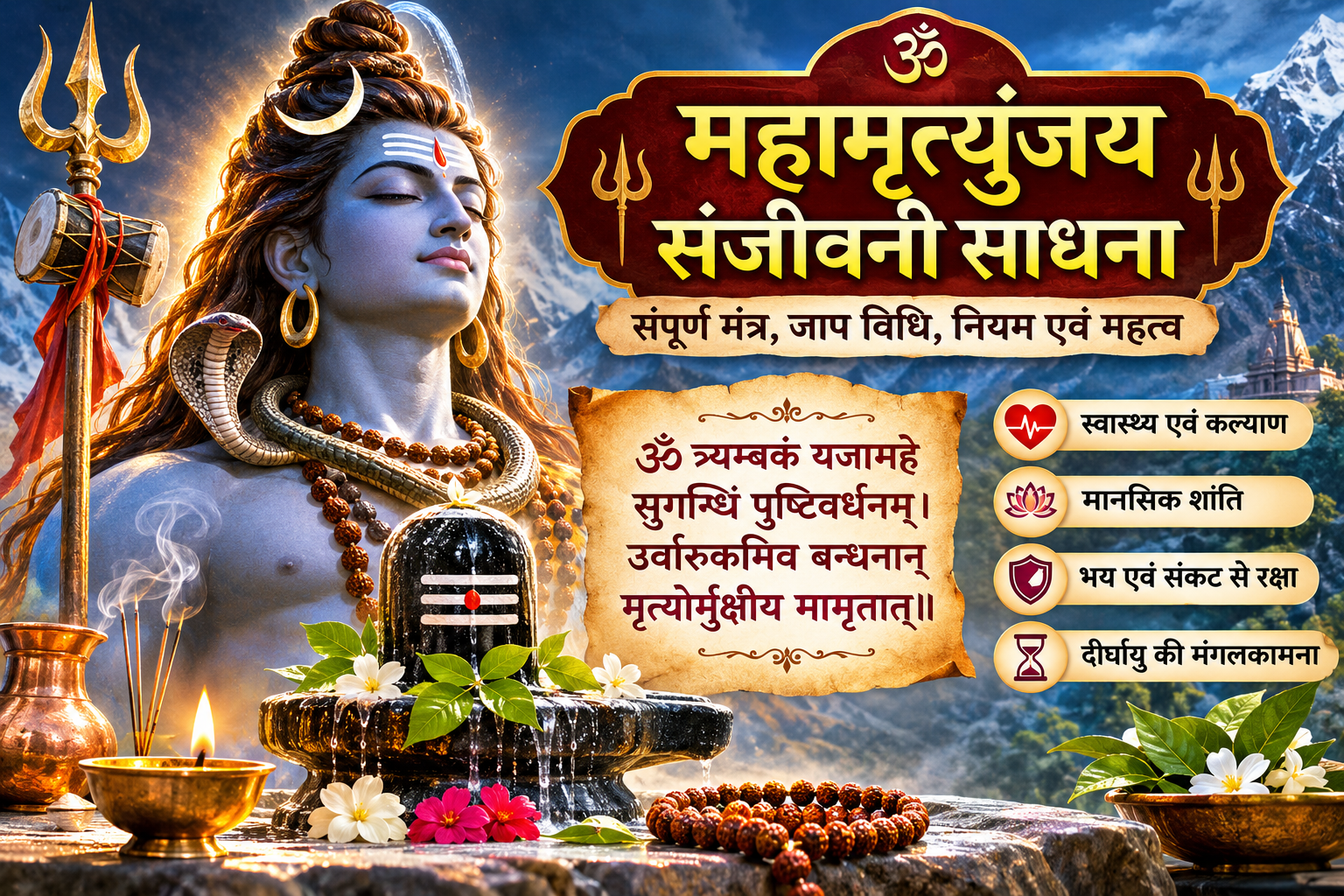
🕉️ Mahamrityunjaya Sanjeevani Sadhana – Complete Mantra, Chanting Method, Rules and Spiritual Significance
🔱 A Traditional Shiva Sadhana for Prayers of Health, Peace, Well-Being and Longevity
The Mahamrityunjaya Mantra is an ancient Vedic prayer dedicated to Rudra, a form of Lord Shiva. Also called the Tryambakam Mantra or Mrityunjaya Mantra, its original text appears in Rigveda 7.59.12.
Mahamrityunjaya Sanjeevani Sadhana is a devotional practice involving prayer, mantra chanting, worship, meditation and a personal intention for well-being.
In Hindu tradition, the mantra is associated with prayers for protection from fear, spiritual courage, good health, peace and long life.
Important: This is a religious and spiritual practice. It is not a medically proven treatment for illness or a guarantee against death. Continue appropriate medical care whenever necessary.
🔱 1. What Is the Mahamrityunjaya Mantra?
The Mahamrityunjaya Mantra is a celebrated Vedic hymn invoking Lord Shiva as Tryambaka, the three-eyed divine being.
Its central prayer seeks liberation from the bondage of mortality while preserving the aspiration for immortality in a spiritual sense.
Devotees traditionally chant this mantra for:
- 🙏 Prayers for health and well-being
- 🛡️ Spiritual courage during difficult times
- 🌿 Blessings for an ill family member
- 🕉️ Peace, devotion and concentration
- 🌙 Inner steadiness when facing fear of death
- 🌺 Prayers for a healthy and long life
📜 2. Vedic Origin and Original Mahamrityunjaya Mantra
The original Mahamrityunjaya Mantra appears in the Rigveda, Mandala 7, Sukta 59, Mantra 12. It is an important part of the ancient Vedic tradition.
🕉️ Original Mahamrityunjaya Mantra
ॐ त्र्यम्बकं यजामहे
सुगन्धिं पुष्टिवर्धनम्।
उर्वारुकमिव बन्धनान्
मृत्योर्मुक्षीय मामृतात्॥
Vedic Reference: Rigveda 7.59.12
🌺 3. Meaning of the Mahamrityunjaya Mantra
The mantra may be understood as a prayer:
“We worship the three-eyed Lord, who is fragrant and nourishes all beings. Just as a ripe fruit separates naturally from its bond, may we be liberated from the bondage of death without being separated from immortality.”
Its spiritual message encourages devotion, acceptance, peace and courage in the face of life's uncertainties.
🌟 4. Purpose of Mahamrityunjaya Sanjeevani Sadhana
🛡️ Health and Well-Being
In Hindu tradition, the mantra is often chanted when someone is experiencing illness or a health-related crisis. It should be regarded as a spiritual prayer rather than a substitute for medical treatment.
🌿 Mental Peace
Regular devotional chanting may help some people develop concentration, a sense of calm and emotional support during stressful situations.
🕯️ Prayer for Freedom from Fear
The name Mrityunjaya expresses the spiritual idea of overcoming the fear associated with mortality.
🌺 Prayer for Longevity
Devotees may chant this mantra while praying for a peaceful, healthy and long life.
📅 5. When Should You Begin the Sadhana?
Mondays, Pradosh, monthly Shivaratri and Mahashivaratri are traditionally considered significant occasions for Shiva worship.
- 🌙 Monday
- 🔱 Pradosh
- 🌑 Monthly Shivaratri
- 🕉️ Mahashivaratri
- 🌅 Any peaceful and convenient day
No single day is universally mandatory for ordinary devotional chanting. Sincerity and consistency matter more than choosing a particular date.
⏰ 6. Best Time for Mahamrityunjaya Mantra Chanting
Early morning is often preferred because the surroundings may be quiet and suitable for prayer.
- 🌅 Early morning
- ☀️ Around sunrise
- 🌇 Evening
- 🌙 A quiet time at night
Choose a time that fits your routine and allows you to practice comfortably and consistently.
📆 7. How Many Days Should You Practice?
Some devotees undertake personal commitments lasting 11, 21, 41 or more days. These are examples of devotional schedules, not universal requirements.
🛕 8. Materials Required for the Sadhana
Common materials used in a simple Shiva worship ritual include:
- 🕉️ An image, idol or Shiva Lingam
- 🪔 A ghee or oil lamp
- 🌿 Incense
- 📿 Rudraksha mala
- 💧 Clean water
- 🌿 Bilva leaves
- 🌸 White or available flowers
- 🍚 Akshata or unbroken rice
- 🪵 Sandalwood paste
- 🥥 Offerings according to family tradition
Not every item is compulsory. A simple worship practice may be performed according to personal circumstances and tradition.
📿 9. Which Mala Should You Use?
A Rudraksha mala is traditionally associated with the worship of Lord Shiva. A mala commonly contains 108 beads.
If you do not have a mala, you may count repetitions on your fingers or with a digital chanting counter.
The absence of a mala does not automatically make ordinary devotional chanting invalid.
🧘 10. Sitting Position and Direction
Sit comfortably on a clean mat in a peaceful place. Facing east or north is considered auspicious in several Hindu worship traditions.
However, there is no need to become anxious if your surroundings do not allow you to face a particular direction during ordinary devotional practice.
🪔 11. Complete Mahamrityunjaya Sanjeevani Sadhana Procedure
Step 1 — Personal Cleanliness
Bathe if possible, wear clean and comfortable clothing, and prepare a clean worship area.
Step 2 — Establish the Worship Space
Place an image, idol or Shiva Lingam before you. Light a lamp and incense safely. Close your eyes briefly and contemplate Lord Shiva.
Step 3 — Make a Sankalpa
Hold a little water, rice and a flower while reflecting on the purpose of your devotional practice.
Offer the water after completing your prayer.
Step 4 — Worship Lord Shiva
According to your tradition, you may offer:
- 💧 Clean water
- 🌿 Bilva leaves
- 🌸 Flowers
- 🪵 Sandalwood paste
- 🍚 Akshata
Follow local temple customs and your family's worship traditions where applicable.
Step 5 — Begin the Mantra Chanting
Take your Rudraksha mala, or chant without one, and begin reciting the mantra with a calm and devotional attitude.
ॐ त्र्यम्बकं यजामहे
सुगन्धिं पुष्टिवर्धनम्।
उर्वारुकमिव बन्धनान्
मृत्योर्मुक्षीय मामृतात्॥
Try to pronounce the mantra clearly. For traditional Vedic pronunciation and accents, consult a qualified teacher or a reliable Vedic recitation.
Step 6 — How Many Malas Should You Chant?
- 📿 1 mala — A manageable beginning
- 📿 3 malas — A regular devotional routine
- 📿 5 malas — For those with additional time
- 📿 11 malas — A more extensive personal or traditional commitment
These counts are examples, not compulsory rules for everyone. Choose a number that is comfortable and sustainable.
🙏 12. How to Meditate During Chanting
Rather than rushing to complete a count, gently focus on the mantra, its meaning and your devotion to Lord Shiva.
If your attention wanders, return to the mantra without frustration. There is no need to hold or force your breathing.
🪔 13. The Lamp and Incense
A ghee or oil lamp and incense may be used as part of traditional worship.
Always place the lamp securely and never leave an open flame unattended.
🌺 14. What to Do After Chanting
After completing your chanting, sit quietly for a short time and offer a concluding prayer.
You may then perform Shiva Aarti or conclude with a brief prayer.
🌿 15. Rules During Mahamrityunjaya Sadhana
🍚 Food and Lifestyle
A balanced and comfortable diet may support your daily routine. Restrictions on particular foods may be part of personal religious traditions, but they are not universal medical requirements.
🧘 Self-Discipline
Traditional devotional practice often emphasizes discipline and moderation. Follow any additional observances according to your chosen tradition.
🕰️ Consistent Timing
Try to practice at approximately the same time each day.
📍 A Peaceful Place
Choose a clean and quiet location whenever possible.
🗣️ Mindful Speech
Try to avoid unnecessary arguments, anger and hurtful speech.
⚠️ 16. Important Precautions
🚨 Important Health Reminder
Mahamrityunjaya Mantra chanting is not a substitute for medical treatment.
- 💊 Do not discontinue prescribed medication without medical advice.
- 🏥 Continue appropriate treatment for serious illness.
- 🩺 Seek urgent medical assistance during emergencies.
- 🙏 Treat chanting as spiritual prayer and emotional support.
- 🧘 Rest if prolonged sitting causes dizziness, weakness or discomfort.
🌙 17. Chanting for an Ill Family Member
A family member may chant the Mahamrityunjaya Mantra while praying for the recovery and well-being of someone who is ill.
Do not pressure a sick person to chant if they are uncomfortable or unable to do so. Their medical care, comfort and rest should remain the priority.
🌺 18. Experiences During Sadhana
Different practitioners may report different experiences during devotional chanting, including:
- 😌 A sense of peace
- 🌿 Feeling less stressed
- 🧘 Greater concentration
- 😴 Relaxation or sleepiness
- 💭 Emotional responses
- 🙏 A deeper feeling of devotion
These experiences are subjective. They do not necessarily indicate supernatural events, and no particular experience should be forced.
📿 19. Can You Chant the Mantra at Night?
Yes. Ordinary devotional chanting may be practiced in the evening or at night when the surroundings are peaceful.
If late-night practice affects your sleep, choose an earlier time.
🕉️ 20. Can Women Chant the Mahamrityunjaya Mantra?
Different Hindu families and religious lineages may follow different customs regarding Vedic recitation and devotional worship.
There is no single practice followed identically by every tradition. Individuals may consider their own devotional beliefs and family or guru traditions.
📿 21. Is Chanting 108 Times Mandatory?
The number 108 is widely used in traditional mala chanting. However, it is not a universal compulsory count for every person practicing ordinary devotion.
You may choose a manageable number of repetitions according to your time and personal commitment.
🔥 22. Is Havan Required?
A havan is not compulsory for simple daily Mahamrityunjaya Mantra chanting.
More elaborate Vedic rituals, special observances and havans may have specific procedures. Consult a qualified priest or traditional teacher before undertaking such ceremonies.
❓ 23. Frequently Asked Questions
Is the Mahamrityunjaya Mantra powerful?
It is regarded as a highly significant and sacred Shiva mantra in Hindu tradition. Its original Vedic text is found in Rigveda 7.59.12.
Can this mantra prevent death?
The mantra expresses a spiritual prayer for liberation from the bondage and fear of mortality. There is no scientific guarantee that chanting can prevent an individual's death.
Can the mantra cure a serious illness?
Chanting may provide spiritual comfort, but it is not a replacement for medical diagnosis or treatment.
Are three malas compulsory every day?
No. Three malas may be part of a personal devotional routine, but this count is not mandatory for everyone.
Is a Rudraksha mala essential?
Rudraksha is traditionally associated with Shiva worship, but ordinary devotional chanting can also be practiced without a mala.
Can I chant the mantra at night?
Yes. You may chant at night if the environment is peaceful and the practice does not interfere with your rest.
Can I chant without a guru?
Many devotees practice ordinary Mahamrityunjaya chanting. For initiation-based rituals, advanced tantric practices or elaborate Vedic observances, guidance from a qualified teacher is recommended.
Is incorrect pronunciation harmful?
Accurate pronunciation is valued in Vedic recitation. Learning from a reliable teacher is helpful, but beginners need not become fearful about making mistakes during ordinary devotional practice.
🌟 24. Simple Daily Mahamrityunjaya Sadhana
For those who cannot undertake an elaborate ritual, the following simple routine may be useful:
- 🛁 Bathe and sit in a clean place.
- 🪔 Light a lamp safely.
- 🙏 Meditate briefly on Lord Shiva.
- 🌿 Offer water and Bilva leaves if available.
- 📿 Take a Rudraksha mala or chant without one.
- 🕉️ Recite the Mahamrityunjaya Mantra calmly.
- 😌 Sit quietly for a few moments.
- 🙏 Pray for health, peace and well-being.
- 🪔 Conclude with Aarti or a short prayer.
🌺 25. Final Guidance and Conclusion
🕉️ The Mahamrityunjaya Mantra is an ancient expression of devotion, surrender and spiritual prayer to Lord Shiva.
While practicing Mahamrityunjaya Sanjeevani Sadhana, focus on sincerity, consistency, peace and devotion rather than expecting guaranteed miracles or immediate results.
If you are praying for someone who is ill, continue supporting their medical care and comfort.
🌿 Practice with faith
🙏 Maintain consistency
🧘 Keep your mind peaceful
💊 Continue necessary medical care
🔱 Remember Lord Shiva
ॐ त्र्यम्बकं यजामहे
सुगन्धिं पुष्टिवर्धनम्।
उर्वारुकमिव बन्धनान्
मृत्योर्मुक्षीय मामृतात्॥
🙏 Har Har Mahadev 🙏
Vedic Reference: Rigveda, Mandala 7, Sukta 59, Mantra 12. For traditional recitation and pronunciation, readers may consult reliable Vedic resources, including the Government of India's Vedic Heritage Portal (vedicheritage.gov.in).
Disclaimer: This article is provided for religious, cultural and educational purposes. Traditional spiritual beliefs described here should not be interpreted as scientifically established medical outcomes.