 Mantra
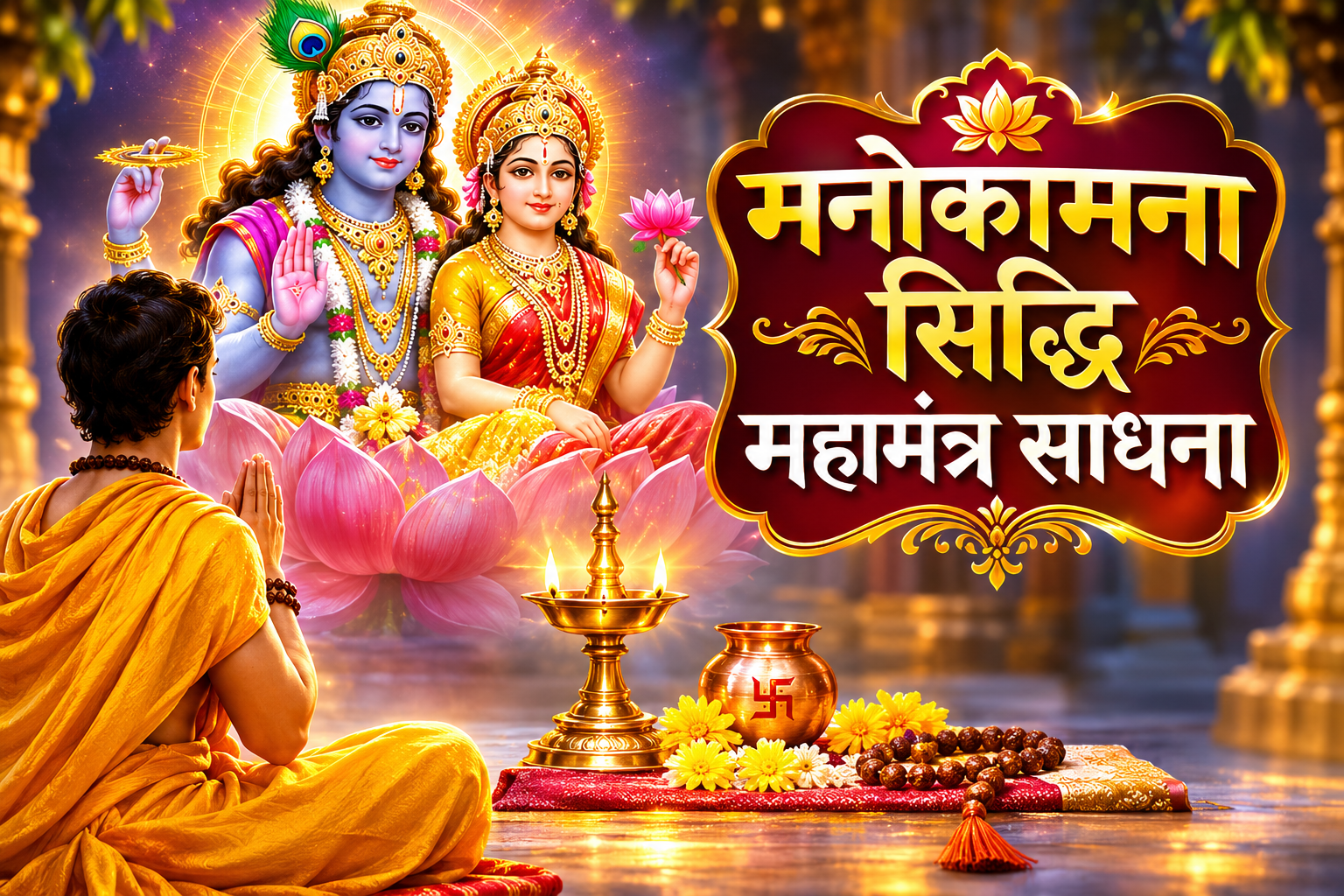
❖ Manokamna Siddhi Mahamantra Sadhana – Complete Mantra, Method and Rules ❖
Every person has hopes, wishes and personal goals. Some seek progress in their careers, others wish for family harmony, financial stability, meaningful relationships or spiritual growth.
In Indian devotional traditions, practices involving prayer, chanting and a personal intention for a positive wish are often described broadly as Manokamna Siddhi Sadhana, meaning a spiritual practice associated with the fulfillment of wishes.
The purpose of this practice is to clarify one's intention, develop concentration, express devotion and remain committed to responsible action toward a meaningful goal.
Some modern spiritual teachings describe intention and mantra chanting in terms of cosmic energy or universal frequencies. However, there is no established scientific evidence that thoughts can directly control external events through such frequencies.
This guide presents a simple devotional and contemplative approach. It does not claim that the complete ritual is a verified ancient Vedic procedure or that any result is guaranteed.
🌺 Spiritual Significance of Manokamna Siddhi Sadhana
In devotional practice, a wish does not have to be material. Prayers may concern education, health, family well-being, emotional balance, meaningful work or spiritual development.
Regular prayer can provide a structured opportunity to reflect on personal priorities, cultivate patience and renew one's commitment to positive action.
Three important principles are:
- Pure intention: Choose a goal that does not harm another person.
- Regular practice: Set aside time for prayer and contemplation.
- Responsible action: Take practical steps toward the desired outcome.
✨ Main Objectives of the Practice
- Clarifying a sincere personal wish.
- Practicing concentration and mental discipline.
- Developing patience and confidence.
- Maintaining hope during difficult circumstances.
- Recognizing realistic opportunities and solutions.
- Expressing gratitude and devotion.
- Strengthening commitment to ethical action.
🔱 Manokamna Siddhi Mahamantra
Some contemporary devotional collections present the following combination of seed syllables for wish-related prayer:
ॐ ह्रीं श्रीं क्लीं नमः॥
The individual seed syllables are associated with different religious and Tantric traditions. The complete combined formula should not be attributed to a specific ancient Vedic text without verifying its source.
🕉 Vishnu Prayer for Auspicious Wishes
The supplied devotional text also includes this expanded prayer:
ॐ नमो भगवते वासुदेवाय मनोकामना सिद्धिं देहि देहि स्वाहा॥
This combines the well-known Vaishnava mantra "Om Namo Bhagavate Vasudevaya" with an additional request for the fulfillment of a wish. The expanded wording should not be confused with the original twelve-syllable mantra.
For a simple, widely recognized devotional practice, the following mantra may be used:
ॐ नमो भगवते वासुदेवाय॥
For specialized seed-mantra or Tantric rituals, follow the guidance of a qualified teacher within your tradition.
🌼 Meaning of the Seed Syllables
Om: A sacred syllable representing spiritual remembrance.
Hrim: Associated with divine consciousness and Shakti in several traditions.
Shrim: Traditionally associated with Goddess Lakshmi, auspiciousness and prosperity.
Klim: Interpreted in various Tantric traditions in connection with love, attraction and divine power.
Namah: An expression of reverence and surrender.
These meanings are symbolic and tradition-specific, rather than measurable physical energy frequencies.
🪔 Materials for the Sadhana
- A clean yellow or saffron-colored sitting mat.
- Optional yellow flowers or a flower garland.
- A safely placed ghee or sesame oil lamp.
- Sandalwood, saffron or turmeric for a tilak.
- Comfortable, clean clothing.
- A Rudraksha or crystal mala.
- A quiet and clean prayer area.
- Paper and a pen to write a personal intention.
- Optional incense such as sandalwood, frankincense or guggul.
- Clean water and a simple offering.
These materials are optional for general devotional prayer. A quiet space and sincere intention are sufficient for a simple practice.
🌞 Auspicious Time and Practice Duration
Early morning and evening are traditionally considered suitable times for prayer and meditation. Some religious traditions also attach significance to the full moon, new moon, Thursdays and Fridays.
- Early morning: A peaceful period around or before sunrise.
- Evening: A convenient time after daily responsibilities.
- Full moon: Traditionally significant in some devotional practices.
- New moon: Associated with certain religious observances.
- 21 days: A personal routine for building consistency.
- 31 days: An optional longer practice.
- 41 days: A sustained period of prayer and reflection.
There is no established evidence that midnight or a particular astrological time increases a universal energy frequency. Choose a schedule that allows adequate sleep and supports good health.
🙏 How to Set a Personal Intention
A sankalpa is a clear personal commitment. You may write one meaningful wish on a clean piece of paper.
Career: I intend to improve my skills, seek appropriate opportunities and work consistently toward employment.
Family: I intend to communicate with patience, kindness and mutual respect.
Financial stability: I intend to plan carefully, develop useful skills and make responsible financial decisions.
Write your intention clearly and positively. It is not necessary to pretend that an event has already occurred.
🔱 Complete Step-by-Step Sadhana Method
🌺 Prepare the Prayer Space
Choose a peaceful location and place a clean sitting mat on the floor. If desired, keep an image of Lord Vishnu, Goddess Lakshmi or your chosen deity nearby.
Place the lamp safely. Facing east is considered auspicious in some traditions but is not mandatory for general prayer.
🌺 Prepare the Mind and Body
Wear clean, comfortable clothes. Sit naturally and take three or four slow, comfortable breaths. Do not strain or hold your breath.
Allow your mind to settle before beginning the practice.
🌺 Apply Tilak and Offer Prayer
If this is part of your tradition, apply sandalwood, saffron or turmeric tilak as a symbol of devotion.
Offer a short prayer asking for wisdom, patience and the ability to act responsibly toward your goals.
🌺 Write Your Wish
Write one main intention on a clean sheet of paper. Choose an ethical goal that respects other people's autonomy and rights.
Keep the paper near your prayer space if desired. Writing an intention is a personal method of clarifying priorities.
🌺 Light the Lamp and Meditate
If you use a lamp, keep it in a safe place. Sit quietly and reflect on your intention.
There is no need to stare continuously at the flame. Close your eyes naturally and prepare for chanting.
🌺 Chant the Main Mantra
Use a mantra appropriate to your tradition. For a simple Vaishnava devotional practice, repeat the following mantra 11, 21 or 108 times:
ॐ नमो भगवते वासुदेवाय॥
If you have received specific initiation or instruction for a seed mantra, follow that guidance.
Chant at a comfortable pace, with attention to pronunciation and devotional meaning.
🌺 Reflect on Your Intention
After chanting, reflect on your goal and the practical actions required to move toward it.
Visualize yourself responding to challenges with patience, confidence and discipline. This may support motivation but does not establish control over external events.
🌺 Offer a Closing Prayer
Join your hands and pray:
O Divine Lord, if my wish supports my well-being and the welfare of others, grant me wisdom, suitable opportunities and the strength to make sincere efforts toward it.
🌺 Keep the Intention Paper Safely
Keep the paper in a clean, secure place. At the end of your chosen practice period, you may preserve it or dispose of it respectfully.
Avoid placing paper, offerings or other materials into rivers and natural water bodies.
📿 Chanting Counts and 21, 31 or 41-Day Practice
- 11 repetitions: A short daily prayer.
- 21 repetitions: A simple beginner routine.
- 108 repetitions: A traditional mala count.
- 21 days: A period for developing consistency.
- 31 days: An extended personal routine.
- 41 days: A longer period of reflection and devotion.
Missing a day does not prove that energy has become imbalanced or that something harmful will occur. Resume your routine when convenient.
✨ Possible Experiences During Practice
Some people may notice the following during regular prayer or meditation:
- A sense of calm or mental clarity.
- Greater awareness of personal goals.
- Improved confidence or patience.
- Normal sensations of warmth or mild bodily vibration.
- Dreams involving personal wishes or everyday concerns.
- Increased attention to available opportunities.
These experiences are not universal and should not be treated as proof of supernatural attainment.
🌙 Unusual or Frightening Experiences
Occasionally, people report unusual sensations during meditation, stress or periods of insufficient sleep:
- A feeling of bodily heaviness or trembling.
- Sudden awakening from sleep.
- Vivid or disturbing dreams.
- A sensation that someone is nearby.
- Anxiety or restlessness.
Such experiences are not reliable evidence of invisible beings or spiritual progress. They can have ordinary explanations involving sleep, stress or health conditions.
If you repeatedly hear unexplained voices, see things others do not see, experience intense fear or develop sleep problems, stop the practice and seek appropriate medical advice.
🌟 Traditional Benefits of the Practice
- Devotion and spiritual reflection.
- Practicing attention toward a meaningful goal.
- Encouragement to develop confidence and determination.
- Maintaining a consistent daily routine.
- Patience and practical judgment in decision-making.
- Gratitude and a sense of spiritual reassurance.
- Motivation to pursue ethical and constructive actions.
No financial, relationship, health or other outcome can be guaranteed through chanting alone.
🌺 Applying the Practice in Daily Life
Finances: Develop a budget, save responsibly and improve useful skills.
Relationships: Practice respectful communication and honor consent.
Career: Learn new skills, apply for opportunities and maintain consistent effort.
Health: Follow appropriate medical care and healthy routines.
Spiritual development: Continue prayer, contemplation, service and self-reflection.
New beginnings: Learn from experience and make practical plans.
⚠️ Important Rules and Precautions
- Never use spiritual practice to harm, threaten or control another person.
- Maintain adequate sleep and general health.
- Seek qualified guidance for advanced Tantric rituals.
- Avoid intoxicants or behaviors that interfere with health and attention.
- Use lamps and incense safely.
- Be cautious of anyone demanding large payments while promising guaranteed miracles.
- Do not replace medical, legal or financial assistance with mantra chanting.
- Do not feel afraid or guilty if you miss a day of practice.
🔱 Why Advanced Tantric Practice Requires Guidance
Initiation-based mantras, nyasa, fire rituals and specialized Tantric practices can involve different rules depending on the lineage.
It is therefore advisable to consult a qualified and trustworthy teacher before attempting advanced rituals.
Simple prayer, devotional remembrance and gentle meditation do not require elaborate ceremonies.
❓ Frequently Asked Questions
❖ What is Manokamna Siddhi Mantra?
It is a general term for devotional chanting and intention-setting practices associated with auspicious personal wishes. There is no single universally accepted mantra for every tradition.
❖ Does Manokamna Siddhi Sadhana fulfill every wish?
No. Devotees may pray for positive outcomes, but the fulfillment of a wish cannot be guaranteed.
❖ Is a 41-day practice mandatory?
No. A period of 21, 31 or 41 days may be chosen for personal consistency. No single duration is compulsory for ordinary devotion.
❖ Can this practice be performed without a guru?
Simple prayer can be performed independently. Specialized Tantric or initiation-based rituals should follow appropriate traditional guidance.
❖ Is midnight the best time for chanting?
Not necessarily. A comfortable schedule that allows adequate sleep is generally preferable.
❖ Are dreams during practice divine messages?
Dreams may reflect ordinary mental processes. They should not automatically be interpreted as divine messages or proof of spiritual attainment.
❖ Can chanting bring employment or wealth?
People may pray for success, but practical results depend on effort, skills, opportunities and circumstances.
❖ Can this practice make someone love me?
Spiritual practice should not be used to override another person's choices or consent. Healthy relationships require mutual respect and communication.
🙏 Closing Prayer
O Divine Lord,
May my thoughts remain clear.
May my actions be guided by wisdom.
Grant me patience and determination.
If my wish is beneficial and ethical,
Guide me toward the right opportunities.
May peace and compassion remain in my life.
Om Shantih Shantih Shantih.
🌸 Conclusion
Manokamna Siddhi Mahamantra Sadhana can be approached as a devotional practice involving intention, prayer, reflection and responsible action.
Its central value lies in clarifying meaningful goals, cultivating discipline and making sincere efforts toward positive outcomes.
Approach spiritual practice with devotion while avoiding unrealistic promises of guaranteed supernatural results.
॥ Sarve Bhavantu Sukhinah ॥
Disclaimer: This article is intended for religious, cultural and educational purposes. It does not guarantee wish fulfillment, healing, financial success or supernatural effects.