 Mantra
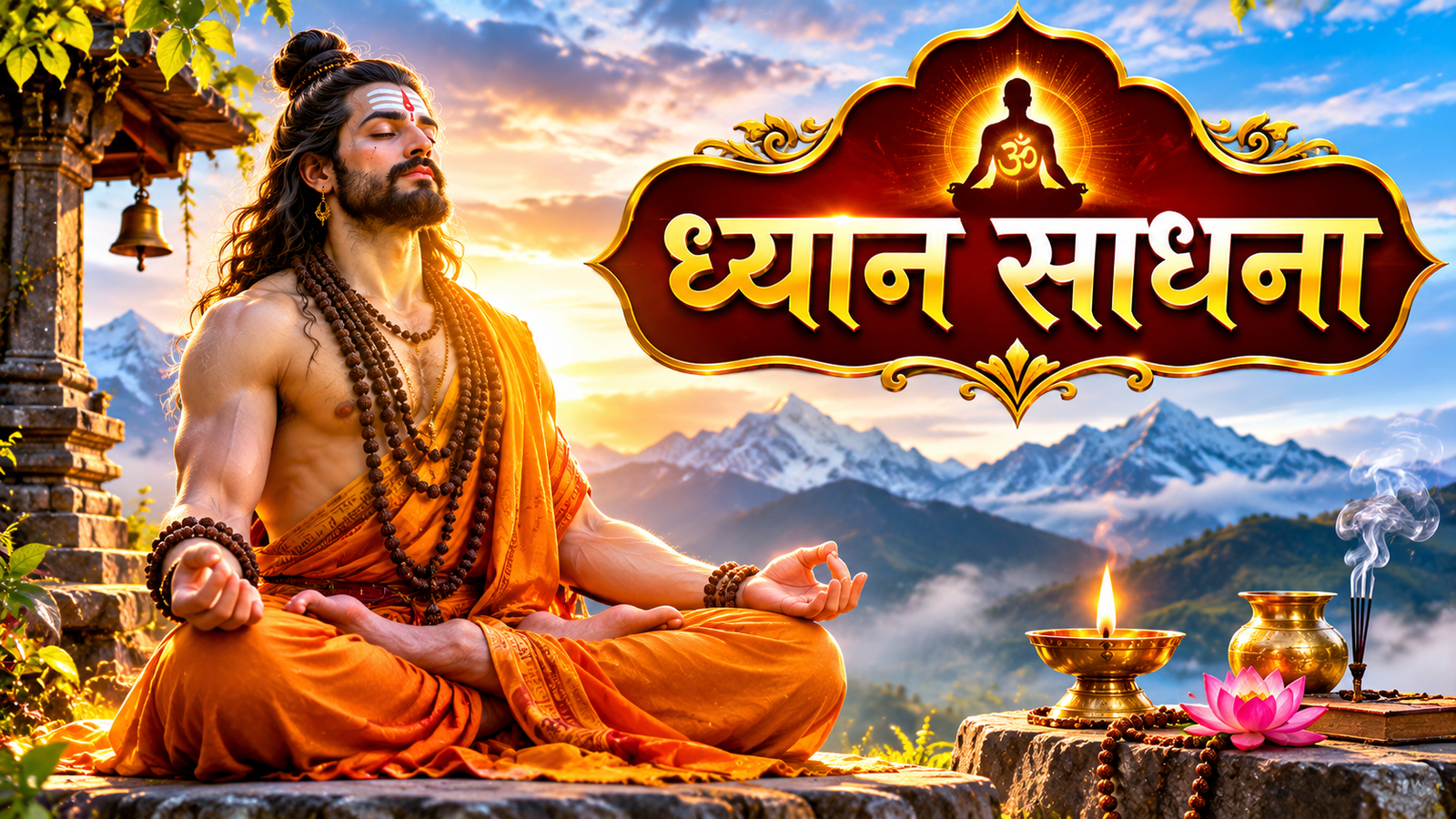
🧘 Meditation Sadhana – Complete Guide to Techniques, Benefits and Daily Practice
Meditation is an ancient practice found in Hindu, Buddhist and other contemplative traditions. It generally involves developing awareness of a chosen object, such as the breath, a mantra, bodily sensations or the present moment.
Many beginners believe meditation means stopping every thought. In reality, thoughts naturally arise during practice. Learning to notice distractions and gently return attention is an important part of meditation.
Regular meditation may help some individuals manage stress and develop greater awareness. However, experiences vary, and meditation should not replace appropriate medical or psychological care.
❖ Spiritual Background of Meditation
In classical Yoga philosophy, meditation is associated with Dhyana, one of the eight limbs described in Patanjali's Yoga Sutras.
Chapter Six of the Bhagavad Gita discusses meditation, self-discipline, posture and moderation in daily living.
In Buddhist traditions, Anapanasati refers to mindfulness of breathing. Although these traditions share certain contemplative practices, their philosophical explanations and spiritual objectives may differ.
❖ Main Objectives of Meditation
- Develop awareness of the present moment.
- Recognize distracting thoughts without automatically following them.
- Practice returning attention to a chosen focus.
- Encourage patience and self-observation.
- Build a sustainable daily contemplative routine.
- Explore spiritual reflection according to personal beliefs.
❖ Preparing for Meditation
🌅 Choosing the Right Time
Early morning is traditionally considered favorable for meditation, but the most practical time is one that fits your daily routine.
Morning, evening or another quiet period can be suitable. Consistency is generally more useful than following an inconvenient schedule.
🏠 Selecting a Peaceful Place
- Choose a clean and comfortable space.
- Reduce unnecessary noise and interruptions.
- Silence your mobile phone.
- Ensure adequate ventilation.
- Use comfortable lighting.
🧘 Comfortable Meditation Postures
You may sit in Sukhasana, another comfortable cross-legged position or an ordinary chair. Lotus posture is not compulsory.
Keep your back comfortably upright, relax your shoulders and avoid unnecessary pressure on the knees or lower back.
Traditional hand gestures such as Gyan Mudra are optional.
❖ Three Meditation Techniques for Beginners
Beginners may find it easier to choose one technique rather than frequently switching between several methods.
❖ Breath Awareness Meditation – Anapanasati
Breath awareness involves observing natural breathing without deliberately changing its rhythm.
🌿 Preparing the Body
Sit comfortably. Close your eyes if that feels safe, or keep your gaze softly lowered.
🌬️ Observing the Breath
Notice the sensation of air moving around your nostrils or another comfortable point of breathing awareness.
Recognize when the breath enters and leaves. Do not force it to become slower or deeper.
💭 Returning from Distractions
When thoughts arise, notice that your attention has moved away. Gently return to breathing without criticizing yourself.
If breath awareness increases anxiety, open your eyes and focus on ordinary surroundings instead. Stop if discomfort continues.
❖ Trataka – Visual Concentration Practice
Trataka is a traditional yogic concentration exercise involving attention to a fixed visual object.
For beginners, a small dot on a wall may be more comfortable than a candle flame.
👁️ Basic Method
Place the chosen object at a comfortable viewing distance. Look at it naturally for approximately 20 to 30 seconds.
Blink whenever necessary. Then close your eyes briefly and relax.
⚠️ Eye Safety
- Never force your eyes to remain open.
- Stop if you experience pain, dizziness or headache.
- Use appropriate fire precautions if using a candle.
- Consult an eye specialist if you have an eye condition.
Trataka and eyebrow-center meditation may be practiced differently across traditions. Straining the eyes upward is unnecessary.
❖ Soham Meditation – Mantra with Natural Breathing
Soham is a traditional Sanskrit spiritual expression often interpreted as "I am That."
In some yogic practices, the syllables are mentally associated with breathing.
Inhale: So...
Exhale: Ham...
Continue breathing naturally while silently remembering the mantra. Avoid forcing your breathing to match a particular rhythm.
When distracted, gently return to the mantra. If coordinating the mantra with breathing feels uncomfortable, practice simple mental repetition instead.
❖ How to Handle Thoughts During Meditation
Thoughts about work, family, memories and future plans are common during meditation.
💭 Do Not Fight Thoughts
Rather than trying to suppress every thought, recognize that thinking is happening.
👁️ Practice Observing
Imagine thoughts passing like clouds across the sky. You do not need to follow every thought.
🏷️ Use Simple Mental Labels
When distracted, silently recognize the experience with a word such as "thinking," "planning" or "worrying."
Then return to your chosen meditation focus.
Notice → Recognize → Return
❖ How Long Should You Meditate?
- Complete beginners: approximately 3–5 minutes.
- Early regular practice: 10–15 minutes if comfortable.
- Established routine: around 20 minutes.
- Experienced practitioners: longer sessions according to individual needs.
Longer sessions are not automatically better. A comfortable and sustainable routine is preferable to forcing yourself through distress.
❖ Food, Hydration and Sleep
Heavy meals may make some people feel sleepy. Choose a comfortable time for meditation and maintain adequate nutrition and hydration.
Extreme fasting is unnecessary. Meditation is also not a substitute for sufficient sleep.
❖ How to End a Meditation Session
- Remain seated quietly for a few moments.
- Notice your hands, feet and surroundings.
- Open your eyes gradually if they were closed.
- Move your body gently.
- Stand up only when you feel comfortable.
❖ Common Meditation Problems
❓ My Mind Keeps Wandering
This is normal. Notice the distraction and return to your focus.
❓ I Feel Sleepy
Review your sleep habits and try a different time of day.
❓ My Back or Legs Hurt
Change your posture, use cushions or sit in a chair. Pain is not required for meditation.
❓ Focusing on Breathing Makes Me Anxious
Open your eyes, observe your surroundings and stop the practice if necessary.
❓ I Experience Unusual Visual Sensations
Do not automatically interpret visual experiences as supernatural signs. Seek professional advice if they are persistent or distressing.
❖ Potential Benefits of Meditation
Research suggests that certain meditation and mindfulness practices may help some people with stress, anxiety symptoms and aspects of emotional well-being.
However, the evidence varies by outcome, technique and study quality.
- Opportunities for stress management.
- Greater awareness of thoughts and emotions.
- Practice in returning attention to the present moment.
- Personal reflection and spiritual engagement.
- Development of consistent self-care routines.
Benefits are not guaranteed, and meditation should not be promoted as a cure for medical or mental health conditions.
❖ Important Meditation Safety Precautions
- Avoid forced breath-holding or uncomfortable breathing techniques.
- Do not ignore physical pain.
- Avoid extreme fasting or sleep deprivation.
- Stop if you experience significant dizziness or distress.
- Do not assume unusual experiences indicate spiritual attainment.
- Seek qualified support for persistent anxiety or disturbing experiences.
- Continue prescribed medical or psychological treatment.
Although meditation is generally considered a low-risk activity, negative experiences can occur in some individuals.
❖ Practical Rules for Successful Meditation
- Practice consistently when possible.
- Begin with short sessions.
- Choose one comfortable technique.
- Allow breathing to remain natural.
- Do not struggle against thoughts.
- Use a comfortable posture.
- Maintain sufficient sleep.
- Reduce unnecessary digital distractions.
- Avoid comparing your experiences with others.
- Remain patient and flexible.
❖ A Practical 40-Day Meditation Schedule
This schedule is an optional beginner framework. It is not a scientifically established period for achieving meditation mastery.
🌱 Days 1–7: Getting Started
Practice for approximately 5–10 minutes. Focus on natural breathing and gently return whenever distracted.
🌿 Days 8–14: Building Consistency
If comfortable, practice for 10–15 minutes. Pay attention to posture and relaxation.
🌳 Days 15–21: Recognizing Thoughts
Practice for approximately 15–20 minutes if appropriate. Notice thoughts without becoming involved in them.
🌺 Days 22–30: Maintaining Your Chosen Method
Continue breath awareness or Soham meditation for around 15–25 minutes, according to comfort.
🌟 Days 31–40: Reviewing Your Practice
Continue for approximately 20–30 minutes if suitable. Reflect on your consistency and personal experience.
There is no need to increase the duration if shorter sessions work better for you.
❖ What Happens After 40 Days?
Meditation does not need to end after 40 days. You may continue daily or several times a week according to your schedule.
Rather than expecting a particular spiritual achievement on a fixed date, consider meditation an ongoing practice of awareness and reflection.
❖ Frequently Asked Questions
❖ What Is the Best Time to Meditate?
Choose a quiet time that you can follow consistently. Many people prefer the morning.
❖ Is Brahma Muhurta Compulsory?
No. It has traditional significance, but meditation can be practiced at other convenient times.
❖ Can Beginners Meditate Without a Guru?
Simple practices such as basic breath awareness can be learned independently. Specialized practices may benefit from qualified instruction.
❖ Can I Meditate While Sitting in a Chair?
Yes. A comfortable chair is a suitable option.
❖ Should All Thoughts Stop During Meditation?
No. Thoughts are normal. Learning to notice them and return attention is part of the practice.
❖ Can Meditation Open the Third Eye?
The third eye is a spiritual concept found in certain traditions. Claims about supernatural abilities resulting from its opening lack reliable scientific evidence.
❖ Does Meditation Guarantee Supernatural Powers?
No. Some spiritual traditions describe extraordinary attainments, but such claims are not established scientific outcomes.
❖ Can Meditation Help with Stress?
Some meditation approaches may support stress management, although individual results vary.
❖ Will Meditation Be Mastered in 40 Days?
No. Forty days is simply a possible practice schedule, not a guaranteed period of mastery.
❖ Final Guidance
Meditation is not a competition to achieve unusual experiences. Its practical value lies in developing awareness, patience and a sustainable habit of reflection.
Allow your breath to remain natural, keep your body comfortable, recognize distractions and return gently to your chosen focus.
Peaceful Mind • Mindful Living • Consistent Practice
Disclaimer: This article is provided for educational, cultural and general wellness purposes. Meditation experiences and potential benefits vary. It does not replace medical or mental health treatment.